Endre Ady
 Hungary
Biography of Endre Ady
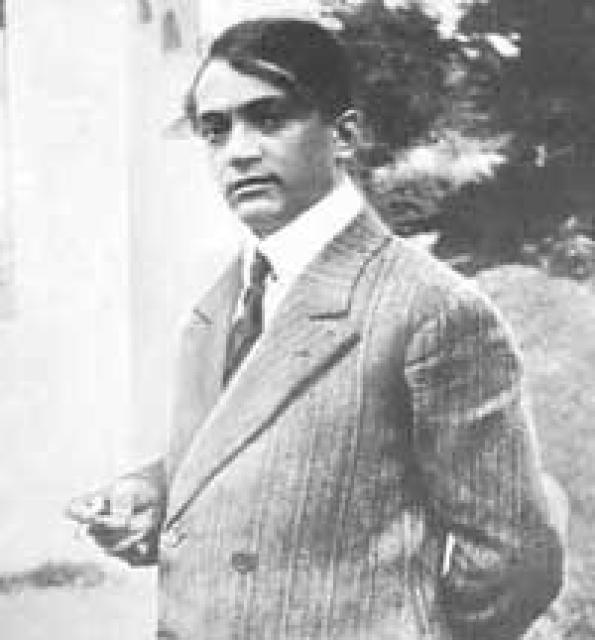
Endre Ady was a Hungarian poet and journalist, whose works reflected the tumultuous world of the turn of the century, with its insights and misconceptions. If Ady had known, or at least suspected, that stadiums would applaud his poetry at the end of the twentieth century, perhaps his fate would have been less tragic, and he would have achieved much more than he did. Ady was born on November 22, 1877, in the village of Ermindszent in Austria-Hungary. Today, this village bears the poet's name, but it is located in Romania. The secret of Ady's birth was hidden from him since he was born with six fingers on each hand, which were removed shortly after his birth. Ady referred to the scars on his hands as "magical marks". Until the age of nine, Ady attended the Calvinist school at the monastery where his mother served. He then studied at the Catholic gymnasium in the city of Nagykaroly. It was during this time that Ady's inclination towards alcohol first manifested, and partly because of this, he was expelled from the gymnasium and transferred to the Calvinist college in Zilah. After completing college, Ady enrolled in university but soon dropped out to work as a journalist for a newspaper in the city of Debrecen. Throughout this time, Ady wrote poetry, and his first collection titled "Versek" was published in 1898. Ady spent over four years in the city of Nagyvarad (now Oradea, Romania), which was one of the cultural centers of Austria-Hungary. His excessive alcohol consumption and libertine lifestyle led to a catastrophe - Ady contracted syphilis, which plagued him until the end of his life. However, this period was also a very productive period for his creative work. His work at an opposition newspaper brought an aggressive tone to Ady's works during that period. In 1903, Ady published his second collection of poems titled "Meg egyszer". In the same year, he met Edith Brühl. They engaged in a passionate romance. During that year, before meeting her, Ady did not write a single poem, but "Leda," as he called her, inspired him. He wrote one poem after another for her, but she found the small town boring. Furthermore, she had ambiguous feelings towards him. Ady was five years younger than her, and she flirted with him, accepted his poems, but at the same time, she interacted with other men.
Later Years and Literary Impact
In the following years, Ady alternately lived in Budapest and Paris, going wherever Leda was at the time. However, Leda's dominant nature increasingly revealed her desire to control him. This would have been acceptable, but she also proved to be insanely jealous, occasionally even hysterical, and often unnecessarily critical, which tormented Ady. To be fair, there were times when he gave her reasons to be concerned. He would disappear for several days, and no one knew where he spent the nights, spending money recklessly in restaurants. She felt like she was losing him and desperately wanted to bind him to her, change his bohemian nature, and make him submissive. Ady, who could not stand coercion, let alone slavery, stubbornly resisted her attempts to control him, as he believed it undermined his freedom. In those moments, both of them became intolerant, spiteful, and unforgiving. Against all reason, they refused to show any compromise.
The revolution of 1905 is expressed in Ady's works through patriotic poems, and his collection of poems titled "Uj versek," published in 1906, caused a revolution in Hungarian literature. During this time, he lived in Paris, and his poetry was heavily influenced by the revolutionary events in France, such as the Paris Commune. In addition to his creative work, Ady also served as a foreign correspondent for "Budapesti naplon." He wrote patriotic articles and published his poems there. From 1908 onwards, Ady regularly published in the journal "Nyugat." In his works included in the collections "Uj versek" (1906) and "Ver es arany," he frequently addressed religious themes. However, opinions among literary circles about Ady's work were divided. Some already considered him one of the most talented poets, while others were shocked by his unconventional language. At the same time, Ady became the nominal leader of the poetic organization "Holnap," which included several popular young poets.
Personal Struggles and Legacy
All of this took place against the backdrop of another crisis in his relationship with Leda. It reached the point where in 1909, Ady checked himself into a psychiatric clinic in Cluj for the first time; his nerves were completely shattered. After an incomplete treatment, he left the clinic and returned to Leda. However, their attempts to rebuild their relationship failed, and in 1912, Ady wrote one of his most famous works called "Beautiful Farewell Greeting" - the harshest, according to Hungarian literary scholars, of all the poems ever written to a woman. "Break, a hundred times broken miracle: If you need forgiveness - I forgive you for the hundred and first - last time, I forgive, I won't hold on."
In 1918, he became the chairman of the newly established "Vorosmarty Academy," but he continued to abuse alcohol. According to contemporary witnesses, during this time "he resembled more of a living corpse than an intellectual diamond." Suffering from alcoholism and tormented by contradictions, Endre Ady died of pneumonia on January 19, 1919, in Budapest.
Over 60 years after his death, Vyacheslav Butusov, a student at the Ural Architectural Institute and an aspiring rock musician, purchased a book of Endre Ady's poems in Russian translation at a bus stop. In 1983, the first album of his band "Nautilus" included two songs based on Ady's poems: "Yastrebinaia svadba" and "Muzyka." The following album featured the song "Knyaz tishiny," and in 1988, an album titled "Knyaz tishiny" was released.