Irina Knorring
- Early Life and Education
- Revolution and Emigration
- Life in Paris
- Literary Career
- Personal Life and Later Years
- Legacy
- Family
Early Life and Education
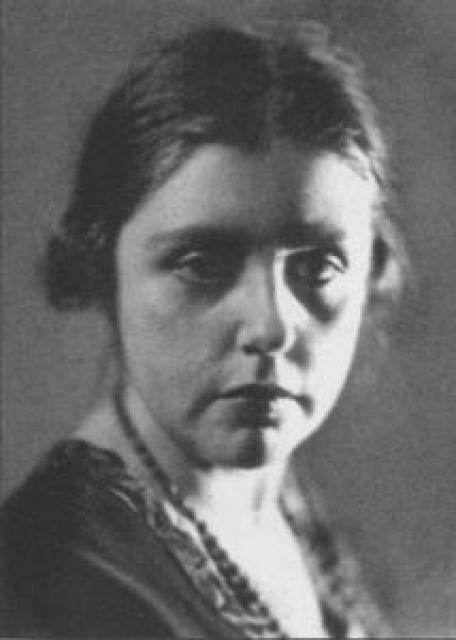
Irina Nikolaevna Knorring was born on April 21, 1906, in Yelshanka, Russia, to a noble family of Volga Germans. Her father, Nikolai Nikolaevich Knorring, was a historian and writer. Her mother, Maria Vladimirovna (née Shchepetilikova), came from a wealthy family.
As a young child, Irina lived with her uncle and aunt in Yelshanka. In 1914, she entered the Yekaterina Pokrovskaya Girls' Gymnasium in Kharkiv. She excelled academically and developed a passion for literature, beginning to write poetry at the age of eight.
Revolution and Emigration
In 1917, the Russian Revolution forced Irina and her family to flee their home. They moved to Rostov-on-Don and later to Crimea. Eventually, they made their way to Bizerte, Tunisia, in 1920.
In Bizerte, Irina continued her education at the Maritime Corps school, graduating in 1924. She also met Yuri Sofiev, a poet who would become her husband in 1928.
Life in Paris
In 1925, the Knorring family moved to Paris. Irina lived in poverty, working alongside her mother to earn money. She also continued her education, taking courses in French and literature at the Sorbonne University.
Literary Career
Irina began publishing her poetry in émigré journals and newspapers. Her first collection, "Poems about Myself," was published in 1931, followed by "Windows to the North" in 1939. Her poetry often explored themes of love, death, and morality.
Personal Life and Later Years
Irina married Yuri Sofiev in 1928, and they had one son, Igor. She struggled with diabetes throughout her life, which she managed through daily injections and strict diets.
In 1943, Irina died of complications from diabetes at the age of 36. She was buried in Ivry Cemetery near Paris.
Legacy
Irina Knorring's poetry has been praised for its personal and confessional nature. She is considered a significant figure in the Russian émigré literary movement.
Her husband, Yuri Sofiev, returned to the USSR in 1955 and became a member of the Union of Soviet Writers. Her father, Nikolai Knorring, wrote a memoir about his daughter and published her posthumous collection of poetry.
Family
Father: Nikolai Nikolaevich Knorring (1880-1967)Husband: Yuri Borisovich Sofiev (1899-1976)
Son: Igor Sofiev (1929-2005)