Enid Mary Blyton
 Great Britain
Biography of Enid Mary Blyton
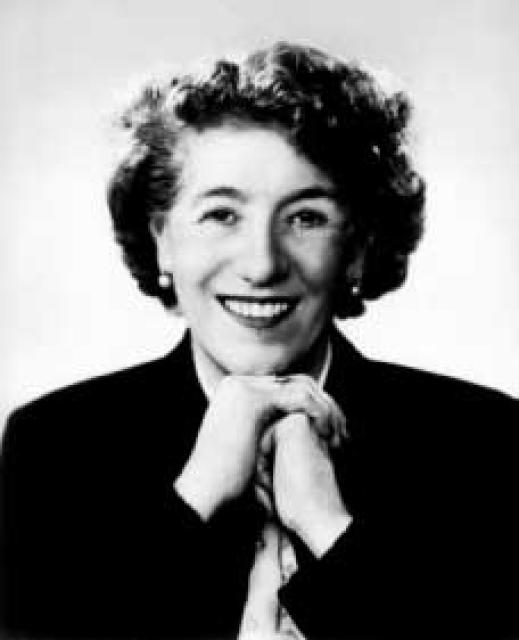
Enid Mary Blyton, one of the most successful children's and young adult authors, transformed into an iconic figure in the literary world. Her books, translated into almost 90 languages, include worldwide bestsellers. Since the 1930s, over 600 million copies of Enid's works have been sold, and her stories remain incredibly popular to this day.
Early Life
Enid Mary Blyton was born on August 11, 1897, in London, England. She was the eldest of three children born to Thomas Carey Blyton, a cutlery salesman, and Teresa Mary Harrison Blyton. Just a few months after Enid's birth, she nearly died from whooping cough, but her father, whom she adored, nursed her back to health. It was Thomas who sparked her interest in nature. In her autobiography, Blyton wrote, "He loved flowers, birds, and wild animals, and knew more about them than anyone." In addition to instilling a love for nature, her father also introduced Enid to gardening, music, literature, and theater. Together, they enjoyed taking walks in the countryside. Teresa, on the other hand, showed little interest in her daughter's hobbies.
Education and Writing
Blyton experienced a significant shock shortly after her thirteenth birthday when her father left the family for another woman. From 1907 to 1915, Blyton attended St. Christopher's School in Beckenham, where she enthusiastically participated in sports. While other subjects did not come as easily to her, she excelled in writing. In 1911, she participated in a children's poetry competition. Despite her mother considering Enid's development as a writer a "waste of time and money," the talented girl received support from Mabel Attenborough, the aunt of one of her friends.
Losing contact with her family, Blyton immersed herself in writing and pursued a career in teaching. Her early works were repeatedly rejected by publishers, but their rejections only fueled her determination to continue. She wrote, "It is partly the struggle that helps you so much. It gives you determination, self-confidence, and hardens your character. All these things help in any profession or trade, and certainly in writing." In March 1916, her first poems were published in "Nash's Magazine." Her first published book, "Child Whispers," a 24-page collection of poetry, came out in 1922. Blyton covered a wide range of topics, including education, natural sciences, biblical narratives, and wrote in various genres, including fantasy and detective stories. Her most memorable character, Noddy, a wooden boy with a blue hat and jingling bell, appears in stories for very young children who are just learning to read. Her "Famous Five" series of children's detective books also remains popular. Initially, Blyton planned to write only eight stories, but their commercial success extended the adventures of the "Famous Five" to 21 books. Among her other notable works is the "Secret Seven" series.
Literary Empire
Having earned well from her early novels such as "The Adventures of the Wishing-Chair" in 1937, Blyton continued to build her literary empire, sometimes releasing up to 50 books a year, not including her works published in newspapers and magazines. She wrote without plans or outlines, largely drawing her plots from her subconscious mind. Blyton simply transferred the stories unfolding in her rich imagination onto paper. Due to her speed and volume of work, rumors circulated that she employed a team of ghostwriters, but she vehemently denied these allegations. In a letter to psychologist Peter McKellar, she described her technique as follows: "I shut my eyes for a few minutes, holding my portable typewriter on my knee. I leave my mind empty and wait. And then I begin to see so clearly, as if real children - my characters from my imagination - were right there before me... The first sentence comes straight into my head, and I must not think about it, I must not think about anything."
Over time, Blyton's works sparked more and more controversies among literary critics, educators, and parents. Some libraries and schools even banned her books. From 1930 to 1950, the BBC Corporation, citing the "lack of literary merits" in Blyton's works, refused to broadcast projects based on her books. Her novels were labeled elitist, sexist, racist, and xenophobic. Blyton did not belong to the "more liberal circles" that emerged in post-war Britain, but after her death in 1968, her books remained bestsellers. Writer Nicholas Tucker notes that Blyton created "an isolated world for young readers, and as they grew older, that world simply dissolved, leaving only memories of emotional excitement and strong self-identification with the characters." Fred Inglis believes that Blyton's books are formally easy to read and easily comprehensible. He points out that psychologist Michael Woods believed that Blyton "was a child, thought like a child, and wrote like a child... Enid Blyton had no moral dilemmas." Imogen, Enid's daughter, stated that her mother "liked to engage with children through her books," but real children were always disruptors, which is why they only found a place in the world created by the writer's imagination.
Enid felt that she had a responsibility to help her readers determine the boundaries of moral values and encouraged her audience to engage in socially significant matters. She created or supported public clubs and organized or assisted in fundraising campaigns for animal and child welfare charities. The story of Blyton's life was portrayed in the 2009 BBC film "Enid," in which Helena Bonham Carter played the role of the acclaimed author.