Erich Hartmann
 Germany
- Biography of Erich Hartmann
- Early Career
- Captivity and Return
- Tactics and Legacy
- Captivity and Post-War Life
- Rehabilitation and Controversies
Biography of Erich Hartmann
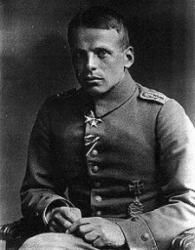
Erich Hartmann, a German fighter pilot, is considered the most successful fighter ace in aviation history. According to German records, he shot down 352 enemy aircraft during World War II, including 345 Soviet planes, in 825 aerial battles.

Early Career
Hartmann graduated from flight school in 1941 and was assigned to the 52nd Fighter Squadron on the Eastern Front in October 1942. His mentor and commanding officer was the renowned Luftwaffe expert Walter Krupinski. Although Hartmann shot down his first aircraft on November 5, 1942 (an Il-2 from the 7th Guards Sturmovik Aviation Regiment), he only managed to shoot down one more plane in the following three months.

However, Hartmann gradually improved his flying skills, focusing on the effectiveness of his first attack. With time, his experience paid off. During the Battle of Kursk in July 1943, he shot down seven planes in a single day. By the end of August 1943, he had already achieved 50 aerial victories.
Captivity and Return
On August 19, 1943, while attacking another Il-2, Hartmann's plane sustained damage, and he was forced to make an emergency landing behind enemy lines. He was captured but managed to escape while being transported to headquarters. He successfully made his way back to his unit by sneaking through the front lines at night.
By August 24, 1944, Hartmann had reached 300 victories, with 11 planes shot down on that day alone. He was awarded Diamonds to his Knight's Cross, a distinction held by only 27 individuals in the German Armed Forces. Hitler traditionally presented the Diamonds himself.
Tactics and Legacy
Throughout his career, Hartmann's preferred tactic was to strike from ambush. He often attacked from below or above, using his Bf-109G's powerful engine to gain an advantage. His favorite technique involved firing at close range and swiftly evading pursuit. This close-range fire, which compensated for the ballistic limitations of the MK-108 cannon and conserved ammunition, also carried the risk of being hit by debris from the enemy aircraft.
Hartmann never engaged in dogfights, considering them a waste of time. He described his tactics as "spot, decide, attack, disengage." His ability to execute these tactics with precision and efficiency made Hartmann a living legend.
Captivity and Post-War Life
At the end of the war, Hartmann surrendered to American forces with his group but was handed over to the Soviet Union. In the USSR, he was convicted of war crimes and causing damage to the Soviet economy by destroying a significant number of planes. He spent 10 years in labor camps. However, in 1955, he was released and returned to West Germany, where he was reunited with his wife.
After his return, Hartmann became an officer in the West German Air Force and commanded an aviation group. He also traveled to the United States multiple times, where he trained American pilots. In 1970, he retired from the military. Erich Hartmann passed away in 1993 at the age of 71.
Rehabilitation and Controversies
In 1997, Hartmann was posthumously rehabilitated by the Russian judiciary, as it was discovered that his conviction had been unlawful. Soviet and Russian historians have debated the claimed number of Hartmann's victories, suggesting that the actual number might be lower than reported. The German command also scrutinized his victories closely from 1944 onwards, including assigning a special observer to his unit to confirm his claims.