Erik Bjornsen
 USA
- Growing Up on Snow
- College and Breakthrough
- World Cup Career and a Standout Stage
- A Career Change at 28
- Still Racing at Home
- Legacy
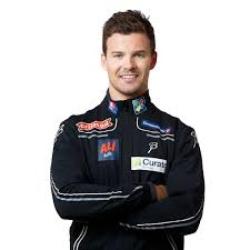
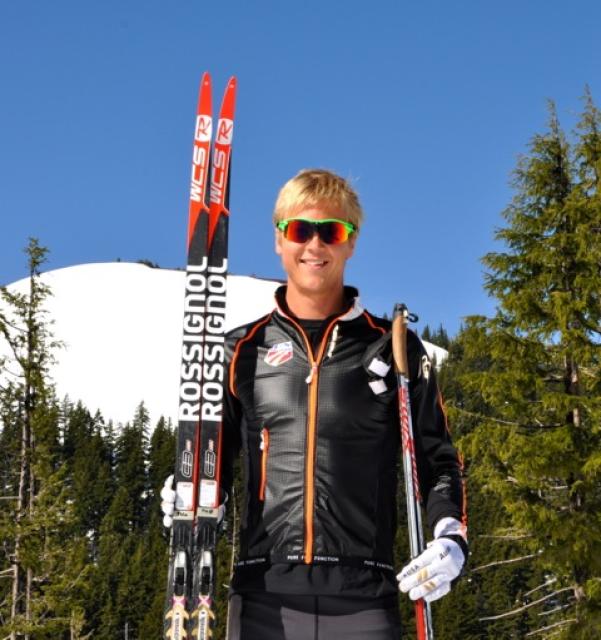
Raised among the trails of Washington’s Methow Valley, Erik Bjornsen grew up with cross-country skiing as a family routine before turning it into an international career. He represented the United States at two Winter Olympics, helped the men’s team sprint reach sixth place at both Games, and earned a World Cup stage podium. He later left the World Cup circuit in his twenties and moved into outdoor tourism and ski-related business.
Growing Up on Snow
Bjornsen was born on July 14, 1991, in Winthrop, Washington. He first tried downhill skiing as a young child, but his family lived in the Methow Valley, a region known for its extensive cross-country trails. Once his parents recognized how strong the local Nordic scene was, the family switched to cross-country skiing. Bjornsen later said he had wanted to compete for as long as he could remember.
His older sister, Sadie, also became an elite cross-country skier and a U.S. Olympian; their younger sister is Haley. The siblings shared both a home environment and a sporting pathway, with the family supporting their training and racing. The Methow Valley’s close-knit ski community remained a point of reference throughout Bjornsen’s career.
College and Breakthrough
After graduating from Liberty Bell High School in Winthrop, Bjornsen attended Alaska Pacific University in Anchorage, studying business administration and racing for the university’s Nordic program. He earned All-America honors as a freshman in 2011 and finished second in the NCAA 20-kilometer classic race that year. He also collected three Junior National Championship titles and made three junior world championship teams.
Bjornsen’s rise accelerated in 2012 and 2013. He became a force on the U.S. SuperTour, winning 14 races and placing second in the overall standings in the 2012–13 and 2013–14 seasons. His 2013 breakthrough brought a World Cup debut, strong finishes at the U23 World Championships, and his first U.S. national titles in freestyle sprint and 15-kilometer freestyle. In 2014 he added a 15-kilometer classic national title.
At the 2014 Winter Olympics in Sochi, Bjornsen competed in six events. He helped the U.S. men’s team sprint reach the final and finish sixth, and he was part of the relay team that placed 11th. His individual results included the 15-kilometer classic, sprint, and skiathlon. For a young athlete in his first Olympics, the Games confirmed his place on a national team still working to close the gap with Europe’s strongest programs.
World Cup Career and a Standout Stage
Bjornsen’s next seasons brought steady international experience. He competed at World Championships in 2013, 2015, 2017, and 2019, with a 14th-place team-sprint finish in 2013 and an 18th-place result in the 15-kilometer classic at the 2017 championships. At the 2016 U.S. championships, he won the 50-kilometer classic, a demanding endurance event that highlighted his strength over distance.
At the 2018 PyeongChang Olympics, Bjornsen again reached sixth place in the team sprint, this time skiing with Simi Hamilton. The final was a difficult race: Bjornsen fell during his leg after catching another skier’s skis, but he recovered and continued rather than abandoning the effort. Hamilton later praised his persistence and their trust as teammates. Bjornsen also competed in the individual sprint, 15-kilometer freestyle, and skiathlon.
His best World Cup result came later that year at the Lillehammer Triple in Norway. In the final 15-kilometer classic pursuit stage, Bjornsen posted the third-fastest time of the day. Because the mini-tour standings combined results across all three stages, his overall finish was 32nd, but the stage performance showed he could match the speed of the world’s best over a single demanding race. He went on to finish 17th in the 15-kilometer classic at the 2019 World Championships, with the U.S. team also placing seventh in the team sprint and ninth in the relay.
A Career Change at 28
Bjornsen stepped away from the U.S. team in late 2019 and announced his retirement from elite competition in March 2020, after eight years on the World Cup circuit. In his retirement message, he reflected on the travel, friendships, and experiences skiing had brought him. Teammates and coaches remembered him as a supportive presence who kept the long season on the road lighter for the athletes around him.
The transition had already begun. During his competitive years, Bjornsen and his wife, French skier and coach Marine Dusser, developed Bjorn to Adventure, organizing Nordic training camps and ski trips. The business grew from their own travel and skiing experiences, including time spent in Alaska and Iceland. Bjornsen had said that work beyond racing gave him balance and a way to give back to the skiing community.
In the years after retirement, the couple had a daughter and built a life in Winthrop. They launched Bjorn To, a company making carbon-fiber ski and adventure poles, and became co-owners of Winthrop Mountain Sports. Bjornsen has remained an enthusiastic skier even as he shifted from professional training to family and business.
Still Racing at Home
Retirement from the World Cup did not end Bjornsen’s competitive streak. In February 2024, he won the 34-kilometer Boulder Mountain Tour in Idaho, edging the runner-up by one-hundredth of a second in a sprint finish. The race organizers noted that he had not competed often in recent years, but that his competitive instincts remained intact. Bjornsen said he had gone into the race without pressure and was simply excited to ski hard with a fast group again.
Legacy
Bjornsen’s career was built on consistency: NCAA success, national titles, years on the World Cup circuit, four World Championship teams, and two Olympic appearances. He never won an Olympic medal, but two sixth-place team-sprint finishes and his World Cup stage result marked significant achievements for a U.S. men’s program competing against deeper European teams. His story also shows the life beyond elite sport: the teammate others relied on, the skier who continued to race for pleasure, and the entrepreneur who carried his love of Nordic skiing into a new chapter.