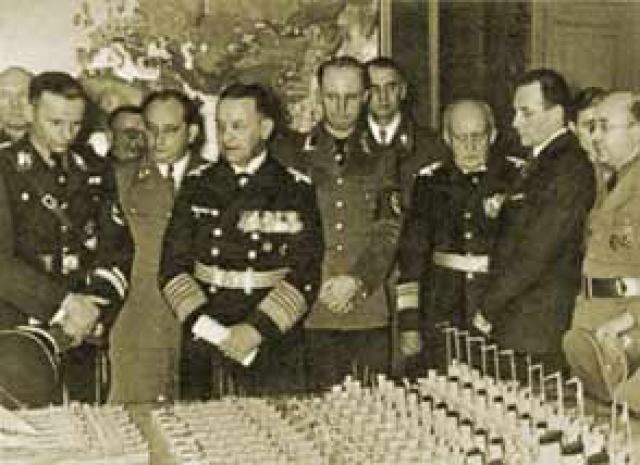
Erikh Reder
 Germany
- Erich Raeder: A Controversial Naval Commander
- Rise to Prominence
- World War I and Interwar Years
- Reconstruction of the German Navy
- The Path to War
- World War II and the Battle of the Atlantic
- Loss of Confidence and Post-War Trial
- Legacy
Erich Raeder: A Controversial Naval Commander
Early Life and CareerErich Raeder (1876-1960) was a German admiral who played a pivotal role in shaping the Kriegsmarine during World War II. Born on April 24, 1876, in Wandsbek, Hamburg, he joined the navy after graduating from school in 1889. Raeder quickly rose through the ranks, becoming one of the top performers in his class and later serving on the flagship of the Eastern Squadron. In 1901, he was appointed as an instructor officer in Kiel.
Rise to Prominence
Raeder's career advanced further when he was assigned as a staff officer to Prince Heinrich, commander of the 1st Squadron of Battleships. He also became a member of the prince's staff and took command of the ship's orchestra, reflecting his love of music. In 1910, Raeder became a navigator on the imperial yacht "Hohenzollern," where he gained the favor of Kaiser Wilhelm II.
World War I and Interwar Years
During World War I, Raeder planned several minelaying operations and shelling of England's shores. He participated in the Battle of Dogger Bank and the Battle of Jutland. After the war, he became head of the Central Command Bureau of the Navy. In 1920, he supported the Kapp Putsch and was transferred to the navy archives, where he studied German naval strategy and tactics.
Reconstruction of the German Navy
In 1928, Raeder was appointed Chief of the Naval Command. He set out to create a balanced fleet, but relied heavily on "pocket battleships" that were designed to outrun any pursuer. He also oversaw the construction of cargo ships and trawlers that could be easily converted into auxiliary cruisers and minesweepers. He initiated the secret construction of submarines.
The Path to War
Raeder's plans for a stronger navy aligned with Hitler's desire for a Weltmacht. In 1935, Hitler appointed Raeder as Commander-in-Chief of the Kriegsmarine. Raeder believed that a war with England was not imminent and focused on building up the fleet to challenge other nations. However, Hitler's aggressive plans and Raeder's own misjudgments led Germany to war against the Allies.
World War II and the Battle of the Atlantic
At the outbreak of World War II, the German surface fleet was significantly outmatched by the British Royal Navy. Raeder focused on the submarine arm, which proved to be a potent weapon against Allied shipping. However, the Kriegsmarine failed to achieve a decisive victory in the Battle of the Atlantic due to various strategic failures and technological shortcomings.
Loss of Confidence and Post-War Trial
As the war progressed, Raeder's relationship with Hitler deteriorated. He opposed the invasion of Norway and later disagreed with Hitler's decision to declare war on the United States. After the war, Raeder was tried at Nuremberg for war crimes and sentenced to life imprisonment. He was released in 1955.
Legacy
Raeder's legacy remains controversial. He was a skilled naval strategist who played a significant role in rebuilding the German navy. However, his overly cautious approach, reliance on untested weapons, and conflicts with Hitler ultimately led to the downfall of the Kriegsmarine in World War II.


