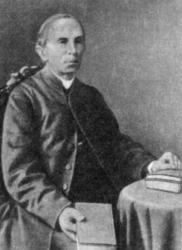
Ermil Kostrov
 Russia
- Ermil Ivanovich Kostrov: The Talented Translator and Poet
- Literary Career
- Early Works: Imitation and Grandiloquence
- Influence of Derzhavin and Refinement of Style
- Influence of European Literature
- Posthumous Recognition and Legacy
Ermil Ivanovich Kostrov: The Talented Translator and Poet
Early Life and EducationErmil Ivanovich Kostrov, born around 1750 to a peasant family in Vyatka, exhibited exceptional talent from an early age. He received education at the prestigious Moscow Slavic-Greek-Latin Academy, where he excelled in his studies. He later graduated with a Bachelor's degree from Moscow University.
Literary Career
Despite serving as an official poet at Moscow University, Kostrov's true passion lay in teaching poetry. However, due to his independent and self-critical nature, he struggled to advance his career, feeling that he was undervalued as a mere "writer." Disillusioned, Kostrov succumbed to alcoholism and died in poverty in 1796.
Early Works: Imitation and Grandiloquence
Kostrov's early poetic output was characterized by an imitation of Lomonosov's grand style, with its heavy use of Church Slavonicisms and elaborate metaphors drawn from Homer and Ossian. These works, such as odes dedicated to prominent figures like Archbishop Platon and Catherine II, emphasized form and grandeur over substance.
Influence of Derzhavin and Refinement of Style
The emergence of Derzhavin's "Felicia" had a profound impact on Kostrov's writing. He adopted a simpler and more direct style, resulting in charming and tender lyrics such as "To a Butterfly" and "The Vow." These poems stand among the finest examples of 18th-century Russian lyricism.
Influence of European Literature
Kostrov was well-versed in ancient and French languages. His translations, both in prose and verse, endeavored to introduce European literary forms and ideas into Russian literature. Among his notable contributions are his translations of Voltaire's satire "Tactics," Apuleius's "The Golden Ass," and the first Russian translation of Homer's "Iliad."
Posthumous Recognition and Legacy
For his poetic and scholarly achievements, Kostrov earned the epithet "Russian Homer." His work had a significant impact on Russian literature, and his sad demise inspired the playwright Kulolnikov to create a five-act verse drama in his memory. A complete collection of his works was published posthumously in the "St. Petersburg Library" in 1802.