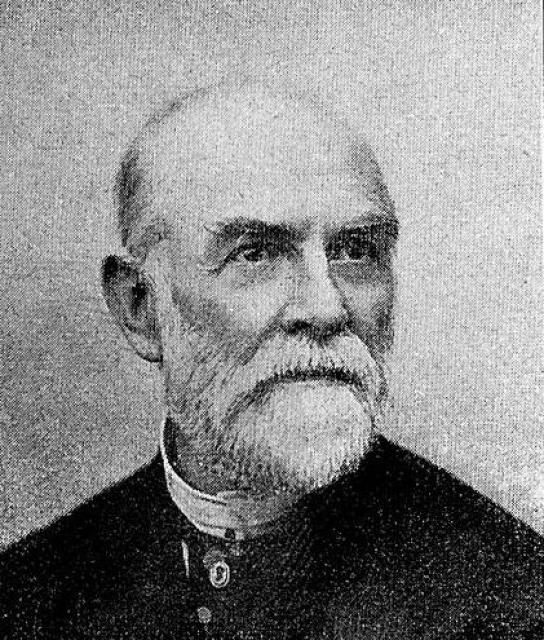
Ernst Engel
 Germany
Biography of Ernst Engel
Ernst Engel, a German statistician and economist, is best known as the author of the economic "Engel's Law," which links consumer behavior to their income level, as well as the "Engel curve," which is similar to the demand curve. He was born on March 26, 1821, in Dresden, Germany. Engel attended the renowned Freiberg Mining Academy in Saxony. After completing his education, Engel traveled through Germany and France.
Early Career
Immediately after the 1848 revolution, Engel was assigned to the Royal Commission in Saxony to conduct research on the relationship between trade and labor. His main focus of economic research was the structure of working-class households' budgets. In 1850, he was sent by the government to assist in organizing the German Industrial Exhibition in Leipzig. His efforts were so successful that in 1854, he was compelled to serve in the newly established Statistical Office as its chief. Engel resigned from this position in 1858.
Later Career and Contributions
In Dresden, Engel founded the first Mortgage Insurance Society. Thanks to his remarkable achievements, he was called to Berlin in 1860, where he became the director of the Berlin Statistical Office, taking over from Karl Friedrich Wilhelm Dieterici. During his tenure in this new position, Engel earned a worldwide reputation as a successful economist and statistician. Rising to the rank of Geheimer Regierungsrat (Privy Councillor), Engel retired in 1882 and spent the rest of his life in Radebeul, near Dresden, where he passed away in 1896.
Work and Publications
Throughout his career, Ernst Engel wrote numerous economic works, but he is primarily associated with his statistical publications, which were released during his lifetime in various periodicals. For example, these included "Preuss. Statistik" in 1861, the journal "Zeitschrift des Statistischen Bureaus" (Statistical Bureau Journal), and the "Zeitschrift des Statistischen Bureaus des Königreichs Sachsen" (Statistical Bureau Journal of the Kingdom of Saxony). Engel himself initiated the launch of these three publications. One of his works, "Des Rechnungsbuch der Hausfrau und seine Bedeutung im Wirtschaftsleben der Nation" (The Housewife's Account Book and Its Significance in the Nation's Economic Life), was published in 1861. Additionally, Engel invented a card system for collecting statistical data, which was used for population censuses. The first person to adopt his card system for a census was the statistician and local figure, Pavel Iordan, during the population census of the city of Reval (now Tallinn) in 1871.