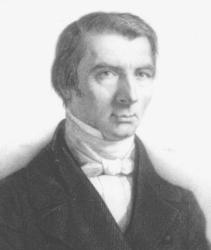
Ernst Friedrich Schumacher
 Germany
- Early Life and Education
- World War II and Economic Contributions
- National Coal Board and Energy Predictions
- "Buddhist Economics" and Third World Development
- Late Career and Legacy
Early Life and Education
Born on August 16, 1911, in Bonn, Germany, to a professor of economics, Fritz Schumacher studied in Bonn and Berlin before winning a Rhodes Scholarship to study at New College, Oxford in 1930. After completing his studies in the UK, Schumacher traveled to the United States to earn a degree in economics from Columbia University in New York City. He subsequently worked in journalism, business, and agriculture.
World War II and Economic Contributions
Preceding the outbreak of World War II, Schumacher returned to England to escape the growing Nazi regime. During the war, he was interned as an "enemy alien" but caught the attention of John Maynard Keynes with an article he wrote while working on a remote farm. Keynes secured Schumacher's release and employed him at Oxford University to assist in economic mobilization efforts. After the war, Schumacher served as economic advisor and later chief statistician for the British Control Commission overseeing the reconstruction of the German economy.
National Coal Board and Energy Predictions
From 1950 to 1970, Schumacher held the position of Chief Economic Advisor at the National Coal Board, then one of the largest organizations in the world. He advocated for the use of coal rather than oil to meet energy demands, recognizing oil as a finite resource and predicting both the rise of OPEC and the challenges of nuclear power.
"Buddhist Economics" and Third World Development
In 1955, Schumacher traveled to Burma as an economic consultant and developed principles he termed "Buddhist economics," emphasizing the importance of meaningful work for human flourishing. He visited numerous Third World countries, encouraging self-sufficiency and aiding local governments in formulating economic policies. Mahatma Gandhi's influence can be seen in Schumacher's belief that economic thinking should be rooted in spirituality rather than materialism.
Late Career and Legacy
Schumacher joined the Catholic Church in 1971 and wrote extensively on economics for publications such as The Times, The Economist, and Resurgence. He was a vocal critic of mainstream Western economics, advocating for a decentralized, ecologically conscious approach. Schumacher's most famous work, "Small Is Beautiful: A Study of Economics as if People Mattered" (1973), remains highly influential and is listed among the 100 most influential books published since World War II.
In 1966, Schumacher co-founded the Intermediate Technology Development Group (now Practical Action) with colleagues including Professor Mansur Hoda. He passed away on September 4, 1977, during a lecture tour. Schumacher's legacy continues to inspire economists, environmentalists, and those who strive for a more equitable and sustainable society.