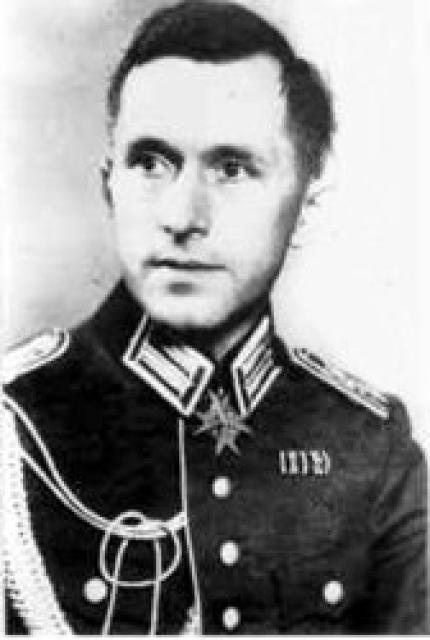
Ernst Junger
 Germany
Biography of Ernst Jünger
Ernst Jünger (1895-1998) was a German writer and philosopher. He was born on March 29, 1895 in Heidelberg, Germany. His father was a chemist and owned a pharmaceutical factory.
At the age of 17, Jünger joined the Foreign Legion and spent several weeks in Africa, which he later described in his work "African Play" (1936). When World War I began in 1914, he volunteered for the army and was awarded the highest military order, Pour le Merite, for his bravery. He achieved the rank of lieutenant.
In his book "Storm of Steel" (1920), Jünger glorified war, vitalism, and the will to death. He created the image of a hero in his works, which became the main theme for the entire "generation of the front" of German writers.
From 1923 to 1925, Jünger studied zoology, geology, and botany. As a nonconformist by nature, he easily aligned himself with the mass totalitarian movement. The Nazis were impressed by his semi-romanticism and semi-technocracy. In 1928, Jünger rejected an offer from Joseph Goebbels to join the NSDAP and run for Reichstag.
In the late 1920s, Jünger flirted with the national-bolsheviks, who gathered around Ernst Niekisch, and saw the Soviet Union as an ideal country that could quickly and efficiently mobilize the entire nation to achieve a specific goal. In his utopia "The Worker. Domination and Form" (1932), Jünger depicted a society of "technical imperialism." According to him, the man of the future, the "worker-soldier," would reject the "romantic individuality" prevalent in bourgeois society and subject himself to full control.
After the Nazi Party came to power, Jünger refused to join the Prussian Academy of Arts and a seat in the Reichstag in 1933. However, he continued to receive high income from the publication of his works and, along with Hermann Hesse and Gerhart Hauptmann, became one of the three most well-known and popular German writers who remained in the Third Reich. His novel "On the Marble Cliffs" (1939) was a veiled criticism of the Nazi regime.
During World War II, Jünger joined the army as a manifestation of "internal emigration." From 1940 to 1942, he served in the headquarters of the German military command in Paris. He spent three months on the Soviet-German front and then returned to France. In October 1944, he was demobilized, and in November, his son died.
After the war, Jünger published diaries of his war years, the utopian novel "Heliopolis," several essay collections, and more. In the Federal Republic of Germany, he became the most successful writer among those who created in the Third Reich.


