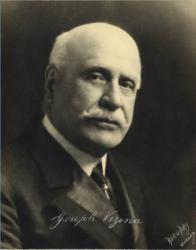
Ernst Sagebiel
 Germany
- Ernst Sagebiel: Renowned Architect of the Third Reich
- Professional Success
- Rise to Prominence Under the Nazi Regime
- "Luftwaffe Modernism" and Recognition
- Wartime and Postwar Challenges
Ernst Sagebiel: Renowned Architect of the Third Reich
Early Life and EducationErnst Sagebiel was born in Braunschweig, Germany, on January 23, 1892. His father, Wilhelm Sagebiel, was a court sculptor. Following his schooling, Ernst pursued architecture at the Technical University of Braunschweig. However, his studies were interrupted by the outbreak of World War I, where he fought and became a prisoner of war. Sagebiel resumed his education after the war, graduating in 1922.
Professional Success
In 1924, Sagebiel joined Jacob Körfer's architectural firm in Cologne. He received his doctorate in 1926. In 1929, he became project manager and manager at Erich Mendelsohn's architectural firm in Berlin. In 1932, he took over as head of a construction site due to the challenging economic climate.
Rise to Prominence Under the Nazi Regime
After the Nazis came to power, Sagebiel joined the Nazi Party and the SA. In 1933, he was employed by the German School of Aviation (Deutsche Verkehrsfliegerschule), a cover for the establishment of the Luftwaffe. From 1934, he served as head of the special projects department for the design and construction of barracks.
In 1934-35, Sagebiel's project on Wilhelmstrasse in Berlin became the first major architectural work of the National Socialist regime. He was then entrusted with the construction of Tempelhof Airport, the largest building in the world at the time.
"Luftwaffe Modernism" and Recognition
Sagebiel's architectural style, seen as harsh and rectilinear compared to the classicism of Albert Speer, was dubbed "Luftwaffe Modernism" due to his close ties to the air force. From 1938, he reported directly to Hermann Göring and became one of the most celebrated architects of the Third Reich. That year, he was also appointed professor at the Technical University of Berlin.
Wartime and Postwar Challenges
With the outbreak of war against the Soviet Union, all of Sagebiel's projects, including the new Tempelhof Airport, were put on hold. The airport was completed only after the war, once the Berlin Airlift had ended. It was used for passenger flights, and the construction of the sprawling terminal was only finished in 1962.