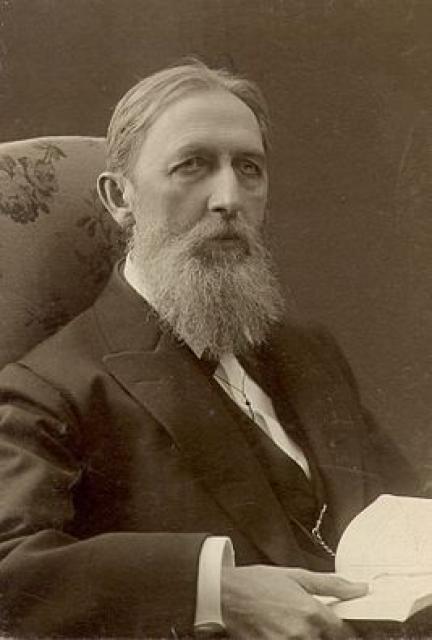
Ernst Salkowski
 Germany
- Early Life and Education
- Medical Career
- Professorship and Research
- Notable Discoveries
- Exchange Anomaly and Publications
- Legacy
Early Life and Education
German physiologist Emil Salkovski studied medicine at the University of Königsberg, where he earned his doctorate in medicine in 1867. He then pursued further studies in Vienna and Tübingen.
Medical Career
From 1869 to 1872, Salkovski served as an assistant at the Medical Clinic in Königsberg. Subsequently, he held assistantships at the Physiological Institute in Heidelberg and the Pathological Institute in Berlin.
Professorship and Research
In 1874, Salkovski was appointed professor of physiological chemistry at the University of Berlin. His research focused primarily on physiological and pathological chemistry, but also extended to pharmacology, analytical chemistry, and hygiene.
Notable Discoveries
In 1876, Salkovski discovered the abnormal excretion of phenol in the body. This finding sparked a series of investigations into protein breakdown products and their effects on the organism. Salkovski also conducted studies on organ self-digestion, the oxidative enzymes in organs, and various aspects of urine chemistry.
Exchange Anomaly and Publications
In 1892, Salkovski identified a new metabolic anomaly characterized by the presence of pentoses in urine. His extensive research was published in renowned journals, including Virchow's Archiv, Zeitschrift für physiologische Chemie, and Zeitschrift für klinische Medicin.
Legacy
Salkovski's work made significant contributions to the understanding of human physiology and pathology. His textbooks, translated into Russian, provided invaluable guidance to scientists in the field.





