Karl Theodor Ernst von Siebold
 Germany
Biography of Karl Theodor Ernst von Siebold
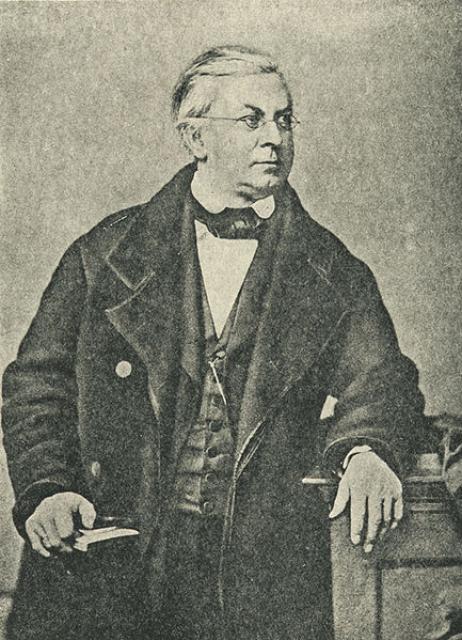
Karl Theodor Ernst von Siebold was a German physiologist and zoologist, known for his contributions to the study of living organisms. He was born on February 16, 1804, in Würzburg, Bavaria. Von Siebold was the son of a professor of obstetrics and the cousin (some sources say younger brother) of the naturalist and physician Philipp Franz von Siebold. He studied medicine and other sciences primarily at the University of Berlin under the guidance of the renowned zoologist and botanist Karl Asmund Rudolphi. He also studied under Johann Friedrich Blumenbach in Göttingen, where he defended his dissertation on the metamorphosis of salamanders.
In 1831, he became a practicing physician in Heilsberg, East Prussia (now Lidzbark Warmiński, Poland), and in 1834, he moved to Königsberg and later that same year, took the position of director at a midwifery school in Danzig. In 1840, von Siebold became a professor of zoology, comparative anatomy, and veterinary medicine in Erlangen. In 1845, he became a professor of zoology and physiology in Freiburg, in 1850, a professor of physiology in Breslau, and finally, in 1853, a professor of zoology and comparative anatomy at the Ludwig Maximilian University of Munich. In Munich, he also took on additional responsibilities as a professor of zoology and director of the zoological cabinet. In 1856, von Siebold was elected a member of the Royal Swedish Academy of Sciences. He passed away on April 7, 1885, in Munich. Von Siebold is considered one of the most diligent and critical German zoologists, often referred to as the "Nestor of German Zoology."
Major Contributions and Achievements
Von Siebold's most famous and significant work was the 'Lehrbuch der Vergleichenden Anatomie' ('Textbook of Comparative Anatomy'), which he co-edited with Hermann Friedrich Stannius from 1845 to 1848. Von Siebold was primarily responsible for the first volume of the publication, which focused on invertebrates. Following Cuvier, von Siebold initiated crucial reforms in systematic zoology, establishing the unicellular nature of protozoa and creating a classification for segmented worms and barnacles. In 1848, together with Albert von Kölliker, von Siebold founded the leading biological journal 'Zeitschrift für wissenschaftliche Zoologie' ('Journal of Scientific Zoology'), which he continued to edit until his death. This was long before the emergence of Europe's leading morphological and anatomical journals.
His scientific achievements also include collaboration with the physician and parasitologist Theodor Bilharz, resulting in the first description of Schistosoma haematobium in 1851, the study of the life cycle of the tapeworm Echinococcus granulosus in 1853, and the discovery of parthenogenesis in insects in 1856. Additionally, he published works on jellyfish, other tapeworms, trematodes, and hymenopterans. His collection of worm specimens was purchased by the Natural History Museum in London in 1851. His fish collection, focusing on freshwater fish in Bavaria, which von Siebold collected from 1804 to 1855, was transferred to the Bavarian State Collection of Zoology in 1863. Although most of the specimens were lost during World War II, some still remain in Munich.