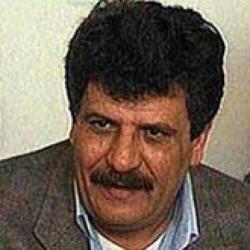
Eugen Konovalets
 Ukraine
- Biography of Yevhen Konovalets
- Formation of Beliefs
- Early Military Experience
- Involvement in the Ukrainian Revolution
- Formation of the Ukrainian Military Organization (UMO)
- Creation of the Organization of Ukrainian Nationalists (OUN)
- Collaboration with Germany
- Internal Crisis and Radicalization
- Legacy
Biography of Yevhen Konovalets
Early Life and EducationYevhen Konovalets, the founder of the Ukrainian Military Organization (UMO) and the longtime leader of the Organization of Ukrainian Nationalists (OUN), was born on June 14, 1892, in the village of Zhovkva in Lviv Oblast. He grew up in a family of Ukrainian intellectuals, both of whom were teachers in a local school. As a student at Lviv University, Konovalets became involved in the Ukrainian national-democratic movement and was arrested for his activism in support of Ukrainianization of higher education in Galicia.
Formation of Beliefs
During his studies, Konovalets attended lectures by Professor Mykhailo Hrushevsky, a prominent Ukrainian historian and leader of the national-democratic movement. It was during this time that Konovalets met Dmytro Dontsov, a spiritual father of Ukrainian nationalism, and their encounter had a significant impact on shaping his beliefs and principles. Konovalets embraced the idea of Ukrainian unity and realized the necessity of armed struggle for national revival.
Early Military Experience
Konovalets became a propagandist for the military-sports youth movement, which later became the precursor to the Ukrainian Sich Riflemen in 1914. He served as a lieutenant in the Austro-Hungarian army during World War I and fought in the Carpathian Mountains. In 1915, he was captured by the Russians and spent time in a prisoner-of-war camp, where he met future comrades and like-minded individuals.
Involvement in the Ukrainian Revolution
After the fall of the Russian Empire in 1917, Konovalets arrived in Kyiv and became involved in the formation of the Galician-Bukovyna Sich Riflemen as part of the Ukrainian Doroshenko Regiment. Under his command, the unit grew to around five hundred experienced and national-conscious fighters. The Sich Riflemen played a crucial role in protecting the Central Rada and its chairman, Mykhailo Hrushevsky, during the Kyiv battles against the Red Guard and workers' militias.
Formation of the Ukrainian Military Organization (UMO)
Following the overthrow of the Central Rada in a coup in March 1918, Konovalets established the Separate Sich Riflemen Detachment in Bila Tserkva near Kyiv. The unit, consisting of forty-six officers and eight hundred sixteen lower ranks, operated independently from the Hetman Skoropadskyi's government and opposed its pro-Russian policies. Konovalets collaborated with leaders of the Ukrainian National Union, who were planning an anti-Hetman uprising.
Creation of the Organization of Ukrainian Nationalists (OUN)
In July 1920, representatives of various Ukrainian nationalist groups met in Prague and formed the Military Organization of Ukrainian Nationalists (UVVO), later renamed the Organization of Ukrainian Nationalists (OUN) in 1929. Konovalets was chosen to lead its Initial Command, which relocated to Berlin in 1922. The main activities of the OUN included individual terrorism against Polish authorities, sabotage, intelligence work in preparation for a future national liberation revolution, and propaganda for Ukrainian national revival.
Collaboration with Germany
Konovalets established close contacts with German intelligence services and received significant financial and material support from Germany in exchange for intelligence gathering against the Soviet Union. The collaboration allowed him to establish underground networks in Soviet Ukraine and other major cities in the Second Polish Republic. He also established a residency in Kaunas, Lithuania, and assisted in the purchase of submarines for the Ukrainian cause.
Internal Crisis and Radicalization
In the early 1930s, the OUN faced internal divisions and provocations from Polish police and intelligence services. The revelations of Roman Baranovsky, the deputy regional commander in Galicia, being a paid Polish agent, caused suspicion and paranoia within the organization. The radicalized youth within the OUN, led by Stepan Bandera, began to view the older generation as hindrances to their revolutionary action.
Legacy
Yevhen Konovalets played a significant role in the development and expansion of Ukrainian nationalist ideas and organizations. However, his collaboration with Germany and the internal divisions within the OUN tarnished his reputation among some Ukrainians. On May 23, 1938, Konovalets was assassinated by a Soviet agent in Rotterdam, Netherlands. Despite his controversial legacy, Konovalets remains a controversial and influential figure in Ukrainian history and nationalism.