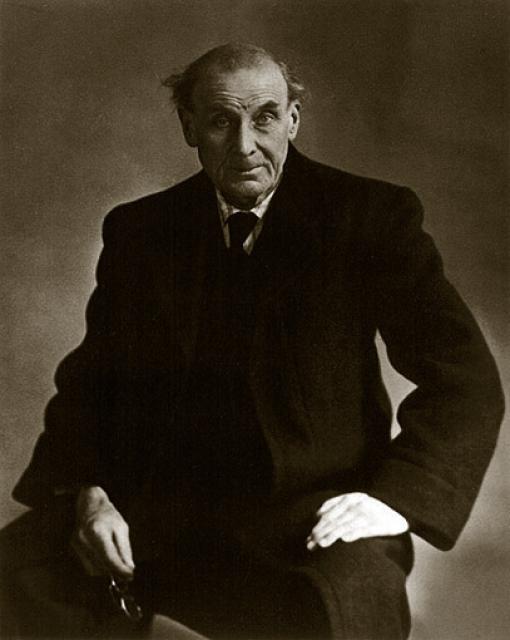
Eugene Atget
 France
Biography of Eugène Atget
Early Life and Career
Eugène Atget, whose full name is Jean Eugène Auguste Atget, was born in 1857 in Libourne, France. He became an orphan at a young age and was raised by his grandparents. After finishing school, Atget joined the merchant navy, but he always had a passion for the arts. In 1878, he returned to France and attempted to enroll in acting courses in Paris. His first attempt was unsuccessful, but he eventually secured a place in the program. However, his acting career did not flourish as he had hoped, and he decided to explore a different form of art.
Photography Career
In the late 1800s, Atget embarked on a new path as an artist, focusing on photography. Despite initial setbacks, he persevered and found success in capturing the rapidly changing city of Paris. His photographs documented the industrial boom, new constructions, and everyday life. Atget's work became increasingly renowned, and he gained recognition as a pioneer of European genre photography through his reportage-style images. He documented the early stages of French automobile and aviation industries, as well as the emergence of cinema and the construction of the metro. Atget also became known for his poignant portraits of ordinary people, including street vendors, small traders, garbage collectors, the unemployed, and the impoverished. His photographs captured fairs, festivals, funerals, and other significant moments in the lives of everyday Parisians.
Legacy and Later Life
Atget could often be seen on the streets of Paris, dressed in worn-out clothes, with a camera and a black cloth draped over his shoulders during photo shoots. Parisians warmly greeted him and willingly posed for him. In 1899, he sold around a hundred of his works dedicated to the old city to the Bibliothèque Historique de la Ville de Paris. Atget married Valentine Delafosse Compagnon, an actress who later became his dedicated assistant in the darkroom.
During World War I, Atget's life became increasingly challenging, as it became difficult to sell his works. His health declined, while his heavy camera equipment demanded physical strength. Nevertheless, Atget continued photographing. After his death, many marveled at the sheer volume of his oeuvre, which comprised approximately 10,000 photographs and negatives. Remarkably, Atget was entirely self-taught and never received formal photographic training. His later works displayed exceptional technical skill, expert use of light, and compositional excellence.
In 1920, Atget's circumstances improved when he managed to sell around 2,500 photographs to the French Ministry of Culture. This success brought him financial relief and some independence. He also attracted the support of several patrons, including American photographer Berenice Abbott, who made efforts to assist him. However, his prosperity was short-lived, as he once again faced poverty towards the end of his life. The death of his wife Valentine in 1926 further devastated him. In his final years, Atget lived in extreme need, while his remarkable works inspired artists such as Man Ray, André Derain, Henri Matisse, and Picasso.
Atget passed away on August 4, 1927. It took several decades after his death for Atget to receive the recognition he deserved. He is now considered one of the most significant photographers in the world.