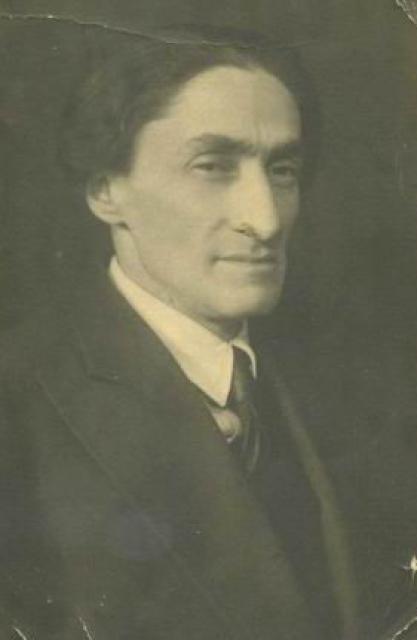
Eugeniy Lann
- Early Life and Education
- Literary Activities and Affiliations
- Historical Novels and Literary Criticism
- Translation Approaches and Controversies
- Personal Life and Tragedy
Early Life and Education
Russian writer, poet, and translator Yevgeny Lann was born into an engineer's family. From 1907 onwards, he resided in Kharkiv. In 1920, he graduated from Kharkiv University's law faculty and was retained as a member of the history of philosophy of law department.
Literary Activities and Affiliations
In 1919, Lann chaired the Russian section of the All-Ukrainian Literary Commission under Ukraine's Ministry of Education. In late November 1920, he departed for Moscow. From 1922, he was a member of the All-Russian Union of Writers. Between 1927 and 1932, he served as an unstaffed research assistant at the State Academy of Art Sciences.
Historical Novels and Literary Criticism
Lann's literary contributions include historical novels such as "The Guard of Mac Cumhal" (1938, second edition 1951) and "Old England" (1943). Additionally, he penned literary-critical works including "The Literary Fate of Maximilian Voloshin" (1926), "Literary Mystification" (1930), and "Dickens" (1946).
Translation Approaches and Controversies
In the 1930s and 1940s, the Soviet translation school was divided into two primary approaches. Lann adhered to the "technologically accurate translation" method, which was contrasted with the "creative translation" approach. Notably, Lann and his wife Alexandra Krivtsova collaborated on translations of numerous works by Charles Dickens. These translations faced criticism, with Nora Gal referring to them as "dry, formalistic, and unreadable." Similarly, prominent translator I. Kashkin critiqued Lann's translation of "Nicholas Nickleby," suggesting that he lacked the necessary talent for translation.
Personal Life and Tragedy
Lann maintained a long-term relationship with Maria Sinelnikova, an actress at the Vakhtangov Theatre. In 1958, plagued by illness, Lann and Krivtsova resolved to end their lives with morphine. Krivtsova passed away on October 29th, and an autopsy revealed that she had not been suffering from cancer as suspected. Lann survived the suicide attempt due to his body's tolerance to morphine. He confessed to poisoning his wife and was placed under investigation. However, he died on November 2nd due to his declining health. Following Krivtsova and Lann's deaths, the term "Lann's way out" emerged in literary circles, referring to suicide as a means of escape.