Eva Ionesco
 France
- A Childhood in the Public Eye
- Acting and Theatre
- Turning Experience into Film
- Writing and Later Work
- A Career of Reclaiming the Story
Born in Paris on July 18, 1965, Eva Ionesco is a French actress, film director, screenwriter and novelist. She first appeared on screen as a child in Roman Polanski’s The Tenant (1976), but her life outside the cinema soon became a subject of public debate: her mother, photographer Irina Ionesco, used her as a model in images that raised serious questions about the exploitation of children. As an adult, Ionesco has built a creative career of her own, using film and writing to reclaim and examine that childhood.
A Childhood in the Public Eye
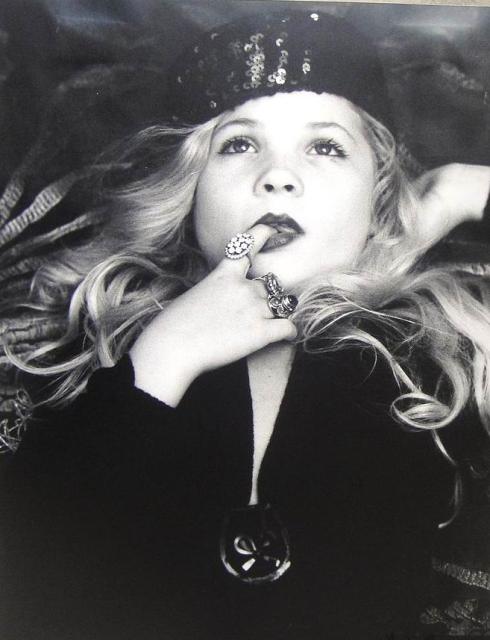
Ionesco’s mother began photographing her when she was very young. The images attracted attention in the 1970s and became controversial because they presented a child through an eroticized adult gaze. Ionesco later described feeling controlled and objectified, and said that she had little choice over how the photographs were made or circulated. Her account has helped shift discussion of the images from their artistic reputation to the child’s experience and right to privacy.
The family situation was turbulent. Ionesco has spoken publicly about periods of separation from her mother and about her struggle to gain control over the photographs. In 2012, a court found her mother liable for violating her image rights and privacy. Though legal action had begun years earlier, Ionesco later described the judgment as an important moment in being heard.
Acting and Theatre
Ionesco’s first film appearance came at age 11, when she played a child in Roman Polanski’s The Tenant. She continued acting through the late 1970s and 1980s, appearing in French and European films and working with directors including Jacques Doillon, Pascal Bonitzer and Patrice Chéreau. In 1987, she joined the École des Amandiers, the theatre school directed by Chéreau, a formative step in developing her craft beyond the public attention attached to her childhood.
Over the following decades, she worked steadily as a character actress. Her credits include Hôtel de France (1987), directed by Chéreau, and parts in films by a range of French filmmakers. She also explored photography herself, making portraits and other staged images, a medium she approached with a complicated personal history.
Turning Experience into Film
In 2011, Ionesco made her feature directing debut with My Little Princess. Inspired by her relationship with her mother and her early experience as a photographic model, the film follows a child drawn into her mother’s elaborate artistic world. Ionesco chose fiction rather than a literal retelling, giving the story room for invention while confronting its painful foundations. The film received a special screening at the Cannes Critics’ Week’s 50th anniversary and earned a César nomination for Best First Film.
She continued directing with Golden Youth (Une jeunesse dorée, 2019), a drama set amid the Paris nightlife and bohemian circles of her adolescence. Across these films, she has returned to memory from the position of an adult artist, shaping difficult material into stories rather than allowing others to define it for her.
Writing and Later Work
Ionesco expanded into literature in 2017. Her books revisit childhood, family history and the people who helped her find a way out of an unsafe environment. In 2025, she published Grand amour, the fourth novel in a series rooted in her early life, and described it as closing that autobiographical cycle. She has said she wants to explore subjects beyond abuse and childhood in future writing.
A Career of Reclaiming the Story
Ionesco’s public image has long been entangled with photographs made when she was a child. Her acting, filmmaking and writing have given her different ways to speak in her own voice. In My Little Princess and her later books, she turns a story once shaped by someone else’s camera into work authored on her own terms: complicated, personal and attentive to the difference between looking at a child and listening to one.