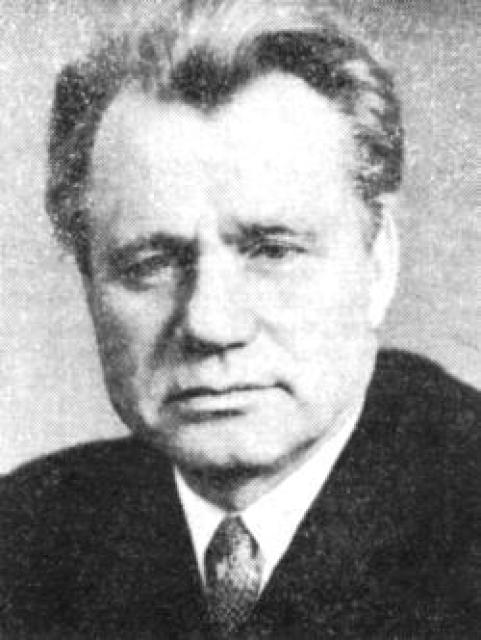
Evalds Wilks
 Latvia
Early Life and Education
Evalds Vilks was born into a working-class family in Valki, Latvia, in 1923. He completed his studies at a local vocational school before joining the Komsomol in 1940.
Military Service
In March 1941, Vilks moved to Riga and began working as a literary contributor for the newspaper "Young Communist." Months later, he voluntarily enlisted in the front lines, where he suffered a severe injury in combat near Tallinn. After evacuation to Leningrad, he was eventually discharged due to his injuries and assigned to work in an agricultural collective in the Omsk region. It was there that he met his first love.
Post-War Career
In 1944, Vilks decided to return home. He completed courses for party and Soviet workers in Kirov and then worked as an instructor for the Central Committee of the Komsomol in Latvia. Subsequently, he joined the newspaper "Padomju Jaunatne" ("Soviet Youth") in Riga as a literary contributor and later became its department head.
Literary Debut
Vilks's literary debut occurred in April 1945 with the publication of his short story "Dobrovolis" ("Volunteer"). The story explored the experiences of young communists who had fought and died in the Great Patriotic War.
Success and Recognition
In the 1960s, Vilks continued to write war-themed stories, including "Uprāvīgais" ("The Stubborn") and "Pirmais valsis" ("First Waltz"). However, it was his 1962 novella "Divpadsmit kilometri" ("Twelve Kilometers") that brought him critical acclaim. The work was considered innovative for its time and touched upon themes of guilt, responsibility, and the human condition.
In 1965, Vilks published the article "Literature Should Be a Continuation of Life," which urged writers to delve deeper into the lives and psychologies of ordinary Soviet citizens. His final work, the short story "Where the Dog Is Buried," was published in April 1975.
Legacy
Evalds Vilks passed away in 1976 from a severe illness. He was a renowned Latvian writer who received numerous honors, including the State Republican Prize and the Order of the Red Banner of Labor. His works continue to be read and appreciated for their insights into war, human nature, and the complexities of modern life.


