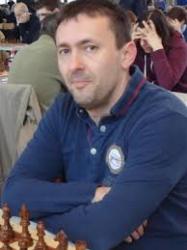
Evgeniy Agrest
 Belarus
- Early talent in Belarus
- A new home and a grandmaster title
- From competitor to coach
- A lasting presence in Swedish chess
Evgenij Agrest’s career has crossed borders as naturally as the chessboard crosses cultures: shaped by Soviet training, launched in Belarus and crowned by decades of success in Sweden. A grandmaster with four Swedish titles and a long record in international team play, he has also become a coach who passes on the lessons of elite competition to younger players. His story is one of early promise, reinvention and a lasting place in Nordic chess.
Early talent in Belarus
Agrest was born on August 15, 1966, in Vitebsk, then part of the Soviet Union and now in Belarus. His father taught him chess when he was about four or five. The game quickly became more than a pastime: as a young player, Agrest won several individual youth and junior championships, and his team claimed the Soviet school championship in 1980.
After military service, he moved to Leningrad, now St. Petersburg, to continue his development. He earned the international master title in 1991 and finished second in the Russian championship in 1992. Those years helped turn a gifted junior into a serious competitor on the adult circuit, just as the political map around him was changing.
A new home and a grandmaster title
In 1994, Agrest moved to Sweden, where he built the next stage of his chess life. Three years later, he earned the grandmaster title. He soon became one of the strongest and most consistent players in the country, winning the Swedish championship in 1998, 2001, 2003 and 2004. His first title came before he had Swedish citizenship, a striking sign of how quickly he had made himself central to the national chess scene.
Agrest also found success beyond the Swedish championship. He won the Nordic championship in 2001 and 2003, and later captured a third Nordic title in 2005. He represented Sweden at eight Chess Olympiads and took part in European and world championship events. In 2010, he finished tied for the lead at the European Union Championship, placing third on tiebreaks. His club teams, including Sollentuna and Team Viking, helped establish a sustained run of success in Swedish league chess.
From competitor to coach
The transition from player to teacher was a natural extension of Agrest’s own experience. Since 2011 he has combined chess coaching and management work, including several years with Swedish grandmaster Nils Grandelius. He has also worked in leadership development, bringing an interest in group dynamics and decision-making to the training room as well as the board.
In 2018, Agrest became coach of Sweden’s open national team. The squad shared sixth place at the Chess Olympiad in Batumi, a major modern result for the country. He later took charge as head coach of the chess program at Celsiusskolan in Uppsala, where he has emphasized not only opening preparation and practical play but also the psychological side of competition: how young players respond to a great win, a painful loss and the pressure of a long tournament.
A lasting presence in Swedish chess
Agrest continues to compete, coach and contribute to Swedish chess development. His long career links several eras of the game, from the Soviet system in which he first trained to contemporary Swedish team chess and youth education. Four national titles tell one part of the story; the other is his steady role in building teams and helping the next generation find its own strengths over the board.