Evgeniy Hrunov
 Russia
Biography of Yevgeny Khrunov
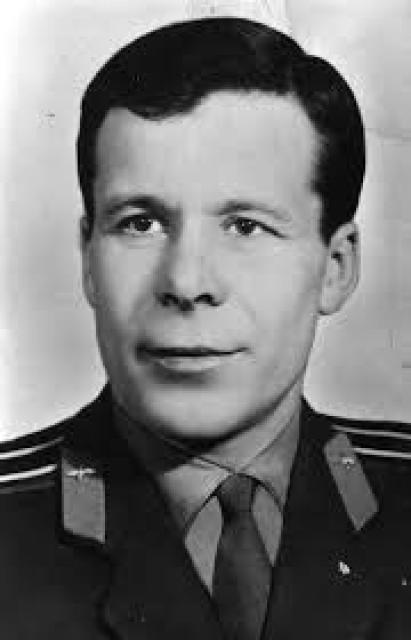
Yevgeny Vasilyevich Khrunov, the 15th Soviet cosmonaut and Colonel of the Air Force, became the second astronaut of the Soviet Union to perform a spacewalk. Among colleagues and friends, he was jokingly called the "space postman" because, during a unique transfer from one spacecraft to another, Khrunov delivered correspondence from Earth to the commander of "Soyuz-4," Vladimir Shatalov.
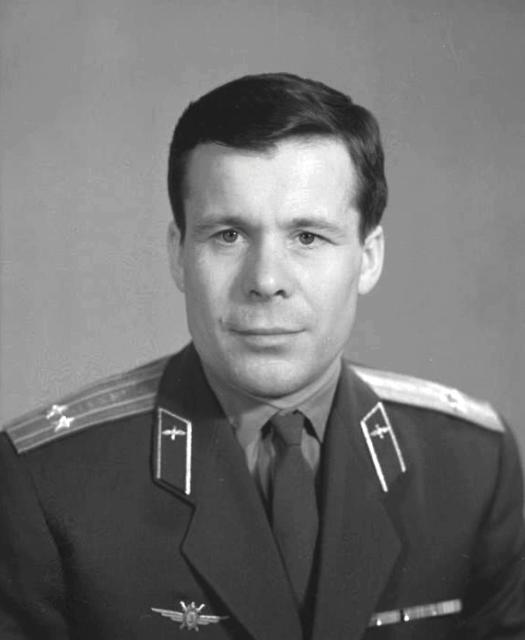
Yevgeny Vasilyevich Khrunov was born on September 10, 1933, in the village of Prudy, Volovsky District, Tula Region, in a large peasant family. He had two sisters and five brothers. During his childhood, like all children of that time, Khrunov witnessed fierce aerial battles between Soviet and German pilots unfolding in the sky above his village. According to his relatives' memories, it was then that his desire to become a pilot was born. Over the years, this aspiration not only did not disappear but also strengthened. The post-war years were not easy, especially after his father's death. His mother had to raise the large family alone.
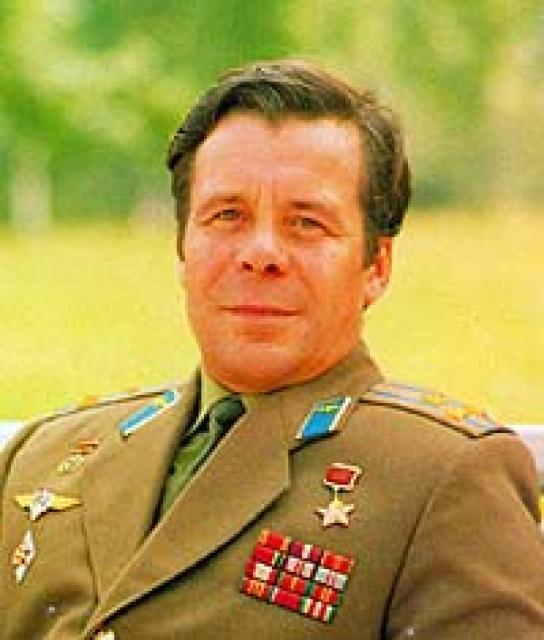
After completing seven grades of secondary school, Yevgeny entered an agricultural technical school in the city of Kashira, Tula Region, which he graduated from in 1952. In the same year, he was drafted into the Soviet Army and sent to a military aviation school. The following year, he applied and was enrolled in the Bataysk Military Aviation School for Pilots. As his fellow servicemen recalled, he loved flying to the point of selflessness. In 1956, he graduated from the school and was assigned to the 86th Guards Fighter Aviation Regiment of the 119th Fighter Aviation Division of the 48th Air Army, stationed in the Odessa Military District. It so happened that another future astronaut, also a member of the Gagarin group, Viktor Gorbatko, served in the same unit with Khrunov.
In 1959, both Khrunov and Gorbatko successfully passed the medical examination and, on March 9, 1960, by order of the Commander-in-Chief of the Air Force, Konstantin Vershinin, they were enrolled in the 26266 military unit, the future Cosmonaut Training Center. After completing general space training, Khrunov became a full-fledged cosmonaut. Then specific program training began. The first prospective flight plans for the "Vostok" spacecraft, drawn up at the end of 1961, provided for the launch of 15 spacecraft. One of them, "Vostok-12," was supposed to be piloted by Khrunov. The program envisaged a flight duration of 10-15 days at an altitude of up to 1000 kilometers. But already in 1963, the plans were revised, and Khrunov was included in the group that started preparing for the flight of two "Vostoks" lasting 8-10 days. However, these plans were not destined to come true. The further construction of "Vostok" spacecraft was discontinued, and all astronauts began preparing for flights under other programs. In 1964, Khrunov began training for the "Egress" program, which involved the first human spacewalk. On March 18, 1965, Alexey Leonov became the first person to leave the spacecraft and float freely above our planet. Khrunov served as Leonov's backup. Only a few people knew about it at the time. After the successful flight of the "Voskhod-2" spacecraft, plans were made for further flights of this type of spacecraft. Unfortunately, these plans were repeatedly revised and ultimately remained unrealized. Firstly, Khrunov prepared as the commander of the "Voskhod-6" spacecraft, scheduled to launch in early 1967, and then as the second pilot of one of the "Voskhods," where he was supposed to make 2-3 spacewalks at a distance of 50-100 meters from the spacecraft. But, as I already mentioned, there were no more "Voskhod" flights. They were replaced by more modern "Soyuz" spacecraft, and Khrunov started preparing for flights on them.
In the mid-1960s, several manned programs were implemented in the Soviet Union. Khrunov was preparing for flights on "Soyuz 7K-OK" spacecraft in near-Earth orbit and on "L-3" spacecraft to the Moon. When the preparation for the launch of the first two "Soyuz 7K-OK" spacecraft began, Khrunov was included in the main crew of "Soyuz-2" alongside Valery Bykovsky and Alexey Yeliseyev. The flight program included docking "Soyuz-2" with the spacecraft "Soyuz-1," on which Vladimir Komarov was supposed to go into space. Then Khrunov and Yeliseyev were to transfer from one spacecraft to another through open space and return to Earth on "Soyuz-1." The experiment began on April 23, 1967, with the launch of "Soyuz-1." The launch of "Soyuz-2" was supposed to take place the next day. Malfunctions on "Soyuz-1" began shortly after the launch, and the flight of "Soyuz-2" had to be canceled. On April 24, 1967, cosmonaut Vladimir Komarov died during his return to Earth. The tragedy that occurred forced the developers to make significant changes to the spacecraft's design and, naturally, to revise plans for further manned flights. Despite the delay, Khrunov continued training with his colleagues. Without interrupting his work at the Cosmonaut Training Center, in 1968, he graduated from the N.E. Zhukovsky Military Engineering Academy, receiving both military and engineering education. And finally, the moment of glory came for Yevgeny Khrunov. On January 15, 1969, he, along with Boris Volynov and Alexey Yeliseyev, went into orbit aboard the "Soyuz-5" spacecraft. The next day marked the appearance of the world's first experimental orbital space station in near-Earth orbit. And then another unprecedented experiment took place. Yevgeny Khrunov and Alexey Yeliseyev put on spacesuits and went into open space. After 37 minutes, they were greeted by Vladimir Shatalov on the "Soyuz-4" spacecraft. To this day, this transition from one spacecraft to another through open space remains unique. On January 17, the cosmonauts returned to Earth. Yevgeny Khrunov spent 1 day, 23 hours, 45 minutes, and 50 seconds in space.
Afterwards, there was preparation for new flights, but Khrunov never had the opportunity to go into space again. Whether it was fatal bad luck or something else is hard to say. We observe it as a fact. In July 1969, he was appointed the commander of the backup crew of the "Soyuz-7" spacecraft, replacing the sick Anatoly Kuklin. A few days later, he himself was involved in a car accident and was removed from further training. The Soviet "lunar program," in which Khrunov was expected to play a significant role, was closed. Working at the Cosmonaut Training Center did not prevent Yevgeny Khrunov from continuing his education. In 1971, he defended his candidate dissertation on the topic of "Biomechanics of Human Work in Space Conditions." In 1972, he graduated from the V.I. Lenin Military-Political Academy with a gold medal. In the following years, Khrunov had to prepare for flights under various other programs, including the "Almaz" program (manned reconnaissance orbital station). In the late 1970s, when the "Interkosmos" program began, he was one of those who trained for these flights. In 1980, together with Cuban astronaut Jose Armando Lopez Falcon, he prepared as the backup crew for the Soviet-Cuban flight, and then, together with Dumitru Prunariu, he began preparing for the Soviet-Romanian flight as the commander of the main crew. But here, he faced a harsh disappointment. In December 1980, Khrunov was suspended from training and expelled from the cosmonaut corps due to a breach of regulations. His next place of work was the NII-30 of the USSR Ministry of Defense. There he worked as a senior researcher in the 120th laboratory of the 46th department of the institute. From 1983 to 1989, he worked in the Main Technical Directorate of the USSR State Committee for External Economic Relations (Deputy Head of the Department, Head of the Department). After retiring from the Soviet Army in 1989 with the rank of Colonel, he participated in the cleanup of the consequences of the Chernobyl Nuclear Power Plant accident.
He was awarded the title of Hero of the Soviet Union (Decree of the Presidium of the Supreme Soviet of the USSR on January 22, 1969). He was awarded the Order of Lenin, the Order of the Red Star, 10 Soviet and two Bulgarian medals. The Soviet Academy of Sciences awarded him the gold medal named after K.E. Tsiolkovsky, and the International Aviation Federation awarded him the honorary diploma named after V.M. Komarov and the de Lavoisier Medal. He was an Honored Master of Sports of the USSR. He was an honorary citizen of the Russian cities Kaluga, Tula, Shakhtersk, Chirchik, and the village of Prudy. Streets were named after him in the district center of Volovo in the Tula Region, and two schools, Nepryadvenskaya and Krasnoznamenskaya, in the Shchelkovsky District. He authored several books, including "Conquering Weightlessness," "The Path to Mars," and "In Orbit Outside the Spaceship" (the last two written jointly with L. Khachaturyants). In addition to his own writings, he was a passionate book lover and had an excellent home library with several thousand volumes.
Yevgeny Khrunov passed away on May 19, 2000. He was buried in Moscow at the Ostankino Cemetery.