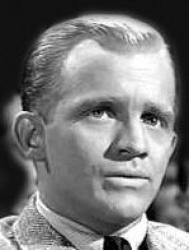
Evgeniy Matveev
 Russia
Biography of Evgeny Matveev
Evgeny Matveev was born on March 8, 1922, in the village of Novoukrainka, Skadovsk District, Kherson Oblast. His father, Semen Kalinovich Matveev, and his mother, Nadezhda Fedorovna Kovalenko, raised him in a peasant family. Matveev had a wife, Lydia Alekseevna Matveeva, and they had two children together, a daughter named Svetlana and a son named Andrei. He also had three grandchildren named Alexey, Evgeny, and Nadezhda.
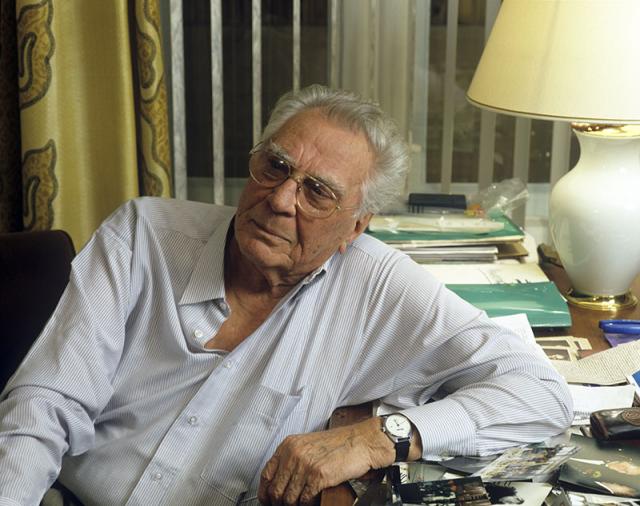
Early Life and Education
Matveev was exposed to hard peasant work at a young age and developed a deep respect for those who worked the land. As a child, he would often go into the fields and feel immense joy and solitude while listening to the song of a lark. Despite the hardships of his childhood, Matveev always sought out joy and happiness. He loved imitating bird songs and playing the balalaika. His talent for performing was noticed by his classmates, who called him "Zhenshka the artist."
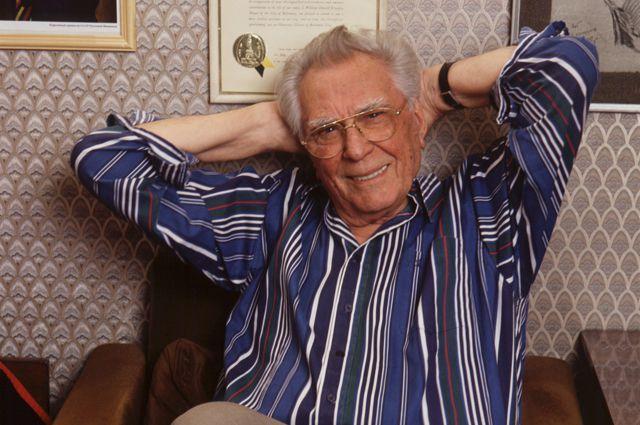
In his early childhood, Matveev did not yet know about theaters and actors, but he unconsciously began to perform. His teachers recognized his aptitude for academics and advised his mother to move to the city of Kherson to provide him with better education. In Kherson, Matveev discovered amateur theater and realized that his place was on the stage. He began participating in amateur performances as a magician, dancer, and singer. In the 9th grade, Matveev decided to drop out of school and pursue his dream of becoming an actor. With his mother's blessing, he embarked on a journey to Kherson, the nearest regional center with a professional theater.
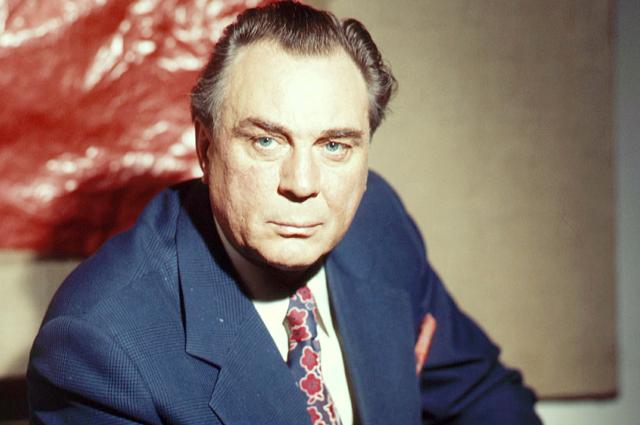
Acting Career
In Kherson's theater, Matveev participated in mass scenes and gradually earned small roles. One of his notable parts was as a musician in the play "Bestalanna." His talent caught the attention of Nikolai Cherkasov, a prominent actor who was in the audience. Cherkasov praised Matveev's performance and advised him to study in Kyiv under A. Dovzhenko, promising his support. Matveev completed his last two years of school as an external student and obtained his certificate. He then enrolled in the acting school at Kyiv Film Studio, where he became a student of Alexander Petrovich Dovzhenko. However, the outbreak of World War II disrupted his plans.

During the war, Matveev dug trenches and helped build fortifications around the city under constant bombing. He longed to join the front as a volunteer but was instead sent to the Tyumen Infantry School. Despite his desire to fight, Matveev excelled academically and was eventually assigned to be an instructor at the school. He continued teaching military science while also nurturing his passion for acting. Matveev's talent as an actor stood out, and he won first place in the Siberian Military District Readers' Competition. In 1946, after being demobilized, Matveev decided to stay in Tyumen and became an actor at the local drama theater, led by director D. Barkhatov.

Life in provincial theaters was challenging, with small troupes, frequent premieres, and constant traveling to remote areas. However, Matveev saw this as an opportunity to play a variety of roles and test himself in different genres. His tall, handsome, masculine, charming, and emotional presence made his performances captivating. He played roles in plays such as "Young Guard" by A. Fadeev, "For Those at Sea" by B. Lavrenev, and "Young Forest" by N. Pogodin. His success did not take long to come, and he was invited to participate in the final round of the All-Russian Youth Theater Competition in Moscow after his role as Borovsky in "For Those at Sea" received recognition. Matveev received numerous tempting offers from theaters in Alma-Ata, Krasnoyarsk, and the Moscow Lenin Komsomol Theater. However, he chose to join the Novosibirsk "Krasny Fakel" theater, which was often referred to as the "Siberian Maly Theater." The theater had an excellent troupe and outstanding directors.
In Novosibirsk, Matveev underwent serious professional training. The theater was led by V. Redlikh, a highly cultured individual, and other accomplished professionals such as V.K. Deni and E.M. Beybutov. Matveev also had his first encounter with Konstantin Stanislavski's teachings. Matveev's mentors were dedicated to his creative growth and aimed to help him develop his individuality. He played numerous successful roles on the theater's stage, including John Harmon in "Our Mutual Friend" by Charles Dickens and Uldis in "Blow, Wind!" based on a play by J. Rainis. The latter performance became a significant milestone in his career.
In 1951, Matveev was awarded the title of "Honored Artist of the RSFSR" for his achievements on stage. While continuing to act in the theater, Matveev also pursued his passion for cinema. He appeared in several films, including "Searchers" based on D. Granin's novel, "The House I Live In" directed by L. Kulidzhanov and Y. Segel, and "The Case of the Striped" directed by V. Korsh-Sablin. By the late 1950s and early 1960s, Matveev's career was flourishing both in theater and cinema. He received accolades for his performances and became known for his talent, passion, and charisma.
Later Life and Directing Career
In the late 1960s, Matveev fell from a horse during the filming of "The Virgin Soil Upturned" and injured his spine. He was temporarily unable to work, and the serious illness kept him away from his beloved profession. However, Matveev's determination and passion for his craft helped him recover. He made his directorial debut with the film "Gypsy," based on A. Kalinin's story. The film, seemingly simple in its narrative about a kind-hearted and courageous blacksmith named Budulai, touched upon profound human experiences where joy and sorrow were not evenly distributed. Matveev's directorial work was embraced by audiences, just as his acting had been. He went on to direct several more films, including "Postal Romance," "Special Mission," "Mad Money," "Victory," "Earthly Love," and "Fate."
In addition to his film work, Matveev also dedicated himself to teaching. He was a professor at the All-Union State Institute of Cinematography and the head of the Azerbaijan Actors Studio. Matveev considered the initial stage of working with aspiring actors to be the most crucial and always conducted the classes himself, despite his busy schedule. He believed in constantly challenging oneself and striving for mastery.
Throughout his career, Matveev received numerous awards and honors for his outstanding performances and directorial work. He was recognized as the best actor of the year by audiences and received accolades at various film festivals. Matveev was elected as an academician of the National Academy of Film Arts and Sciences of Russia.
Evgeny Matveev left an indelible mark on the world of Russian theater and cinema with his talent, dedication, and passion. His performances and directorial work continue to be celebrated and admired by audiences and critics alike.