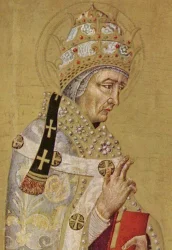
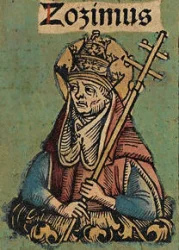
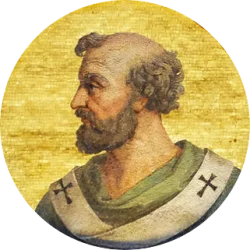
Fabian
Fabian’s rise to the bishopric of Rome began, according to an early Christian historian, with a dove settling on his head during an election. The striking story made him an unlikely choice who became, in time, a respected administrator and one of the first victims of Emperor Decius’ persecution. His long leadership helped organize the growing Roman church before a sudden crisis ended his life.
An Unusual Election
Fabian became bishop of Rome in 236, succeeding Anterus. Eusebius, writing in the fourth century, tells that Fabian had come to the city from the countryside and was not among the expected candidates. As the community assembled to choose a new bishop, a dove alighted on him, which those present interpreted as a sign of divine favor. They elected him unanimously. Whether understood literally or as a story of providence, the account captures the surprise of his selection.
Organizing the Roman Church
Fabian led the Roman Christian community for about fourteen years, a period largely free of major imperial persecution. Later church records credit him with dividing the city into seven districts, each placed under the care of a deacon. The arrangement helped coordinate pastoral work and support for the poor as the Christian community expanded.
Tradition also associates Fabian with the recording of accounts of martyrs and the care of Christian burial places. The details come from later church histories, but contemporary testimony from Cyprian of Carthage praised the integrity of Fabian’s administration. His leadership appears to have strengthened the Roman church’s organization and public standing.
Martyrdom under Decius
The relative calm ended when Emperor Decius launched a campaign requiring people across the empire to perform public sacrifices. Christians who refused faced punishment. Fabian died on 20 January 250, during the opening period of the persecution. The sources identify him as a martyr, though they do not establish exactly how he died. He was buried in the cemetery of Callixtus, where an early inscription identifies him as bishop and martyr.
His death left the Roman see vacant for more than a year, as persecution made it difficult to choose a successor. That long interruption reflected the scale of the crisis and the importance Fabian had held within the community.
Legacy
Fabian is remembered as both a capable church leader and a martyr. The story of the dove gave his election a lasting aura, while the administrative reforms attributed to him point to the practical work required to guide an expanding community. His death during the Decian persecution made him a symbol of steadfastness at a moment when Roman Christians faced pressure to abandon their faith.