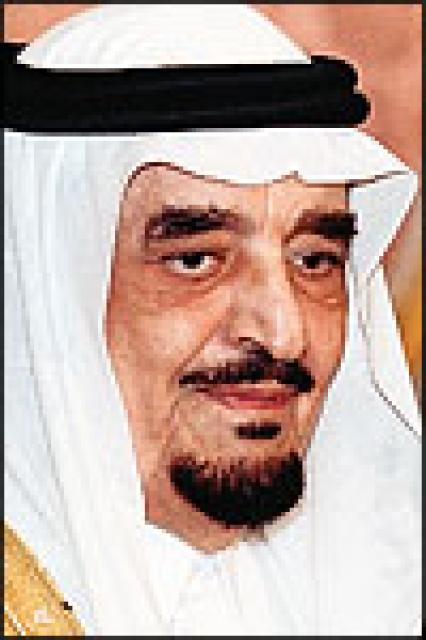
Fahd
Fahd bin Abdulaziz Al Saud was king of Saudi Arabia from 1982 until his death in 2005. A son of the kingdom’s founder, Abdulaziz Ibn Saud, he moved through senior government posts over several decades before becoming monarch. His reign combined rapid development and major religious projects with consequential decisions during the Gulf crisis of 1990–91.
Early life and public service
Fahd was born in Riyadh. Saudi sources commonly give 1921 as his birth year, while some historical accounts report other dates, so the exact year is not certain. He was educated at the Palace School and the Saudi Scientific Institute in Mecca, and began taking on official duties as a young prince.
In 1953, Fahd became Saudi Arabia’s first minister of education. He oversaw the expansion of public schooling and the development of a national education system, including the establishment of King Saud University in 1957. He became minister of interior in 1962 and was named second deputy prime minister in 1967. In 1975, after King Faisal’s assassination and the accession of King Khalid, Fahd became crown prince and first deputy prime minister.
King of Saudi Arabia
Fahd succeeded his half-brother King Khalid on June 13, 1982. During his reign, the country invested heavily in transportation, education, and other infrastructure. In 1986, he adopted the title “Custodian of the Two Holy Mosques,” emphasizing the monarch’s responsibility for Islam’s sacred sites in Mecca and Medina. His government oversaw major expansions of both mosques and established the King Fahd Complex for the Printing of the Holy Quran.
In 1992, Fahd issued the Basic Law of Governance, the Shura Council Law, and the Law of Provinces, followed by a law for the Council of Ministers in 1993. These measures set out key structures for government and administration while retaining the monarchy.
The Gulf crisis and later years
The most consequential foreign-policy test of Fahd’s reign came after Iraq invaded Kuwait in August 1990. Fahd authorized the deployment of U.S. and other coalition forces to Saudi soil, helping establish the military presence that would drive Iraqi forces from Kuwait. The decision protected the kingdom and supported Kuwait’s restoration, but the presence of foreign troops in Saudi Arabia also drew strong criticism from some Muslims and Saudis.
After suffering a stroke in 1995, Fahd’s public role diminished, and Crown Prince Abdullah assumed increasing responsibility for day-to-day affairs. Fahd died in Riyadh on August 1, 2005, and was succeeded by Abdullah.
Legacy
Fahd’s long reign shaped modern Saudi Arabia through expanded education and infrastructure, new administrative laws, and an enlarged role for the country in regional diplomacy. His tenure is also remembered for the Gulf War decision to host foreign forces, a choice that became a lasting point of debate about Saudi security, sovereignty, and religious identity.