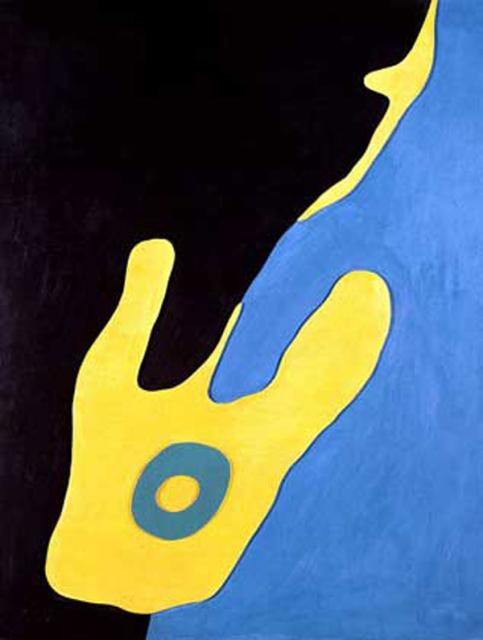
Jean (Hans) Arp
 France
- Hans (Jean) Arp: A Pioneer of Abstraction and Dada
- Early Life and Influences
- Dadaism and Collaged Forms
- Surrealism and Three-Dimensional Sculpture
- Organic Abstractions
- International Recognition and Legacy
Hans (Jean) Arp: A Pioneer of Abstraction and Dada
Jean Arp, born Hans Arp in 1887, was a French artist and sculptor best known as a founder of abstract sculpture and the Dada movement. He was instrumental in introducing elements of absurdity and randomness into art.
Early Life and Influences
Arp was born in Strasbourg, Alsace, which was part of Germany at the time. He studied in Weimar and Paris, meeting leading artists of the period, including members of the Blue Rider group, such as Wassily Kandinsky and Paul Klee.
Dadaism and Collaged Forms
In 1915, Arp moved to Zurich and became involved in the Dada movement. He started creating geometric collages, often in collaboration with Sophie Taeuber, whom he married in 1922.
Surrealism and Three-Dimensional Sculpture
Arp co-led a branch of the Dada movement in Cologne before moving to Paris. In 1925, he participated in the first surrealist exhibition. In the 1930s, he shifted towards creating three-dimensional sculptures in wood, later working in plaster, bronze, and stone.
Organic Abstractions
Arp's artistic style featured soft, simple, and organic shapes derived from natural forms, such as clouds, leaves, and human bodies. His works often conveyed a playful and whimsical quality, yet contained underlying intellectual depth.
International Recognition and Legacy
A major retrospective exhibition of Arp's work was held at the Museum of Modern Art in New York in 1958. He contributed to the decoration of the UNESCO building in Paris. Arp passed away in Basel in 1966. His legacy continues to inspire artists and shape the development of abstract art.



