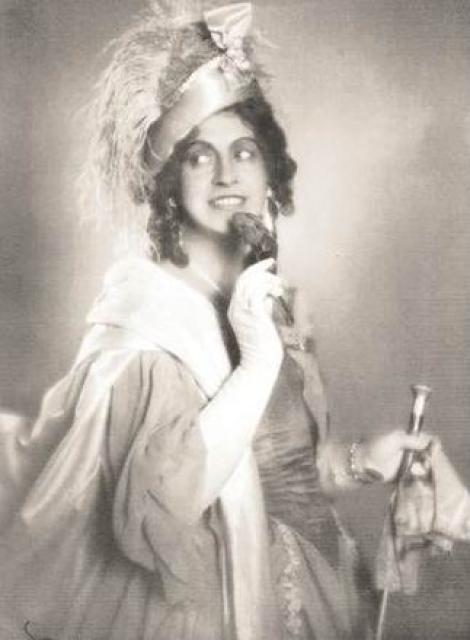
Felicie Huni-Mihacsek
 Hungary
- Early Life and Education
- Debut at the Vienna State Opera
- Collaboration with Richard Strauss
- Vienna State Opera Stardom
- Munich State Opera
- Transition to Lyrical and Lyric-Dramatic Roles
- Teaching Career
- Marriage and Legacy
Early Life and Education
Felicia Hüni-Mihacsek was born on April 3, 1891, in Pécs, Hungary. She studied singing at the Vienna Music Academy under Rosa Papier-Paumgartner, a renowned contralto at the Vienna Court Opera.
Debut at the Vienna State Opera
Hüni-Mihacsek made her debut at the Vienna State Opera in 1919, performing the role of the Queen of the Night in Mozart's "Die Zauberflöte." She was immediately recognized for her exceptional vocal abilities and was soon made a member of the ensemble.
Collaboration with Richard Strauss
Hüni-Mihacsek's career took a significant turn when she collaborated with Richard Strauss. She created the role of the Falcon in the world premiere of Strauss's opera "Die Frau ohne Schatten." She also sang under Strauss's direction in productions of "Ariadne auf Naxos," "Don Giovanni," and "Die Hochzeit des Figaro."
Vienna State Opera Stardom
Hüni-Mihacsek quickly established herself as one of the leading sopranos at the Vienna State Opera. Her repertoire expanded to include roles such as Micaëla, Agathe, Donna Elvira, and Elisabetta. She shared many roles with another renowned soprano, Berta Kiurina.
Munich State Opera
In 1925, Hüni-Mihacsek left the Vienna State Opera for the Munich State Opera. There, she became even more popular, singing leading roles for nearly 20 years. Her repertoire expanded to include Gilda, Eva, Sieglinde, and Ariadne.
Transition to Lyrical and Lyric-Dramatic Roles
Initially known for her coloratura soprano voice, Hüni-Mihacsek gradually transitioned to lyrical and lyric-dramatic roles. Her singing was characterized by its wit, charm, and exceptional energy.
Teaching Career
Hüni-Mihacsek retired from the stage in 1945 and began teaching. She gave her final public performance in Munich in 1953, as Marschallin in Strauss's "Der Rosenkavalier."
Marriage and Legacy
Hüni-Mihacsek was married to Swiss industrialist Alfred Hüni. She passed away in Munich on March 26, 1976, leaving behind a legacy as one of the most acclaimed sopranos of her era. Her recordings, including duets with German baritone Willi Domgraf-Fassbaender, continue to be highly regarded by opera enthusiasts.


