Ferdinand Daucik
 Slovakia
- Ferdinand Daučík: A Slovak Football Legend
- International Career
- Slovak National Team and Slovan Bratislava
- Return to Slovan and Emigration to Spain
- "Hungaria" and Barcelona
- Legacy
Ferdinand Daučík: A Slovak Football Legend
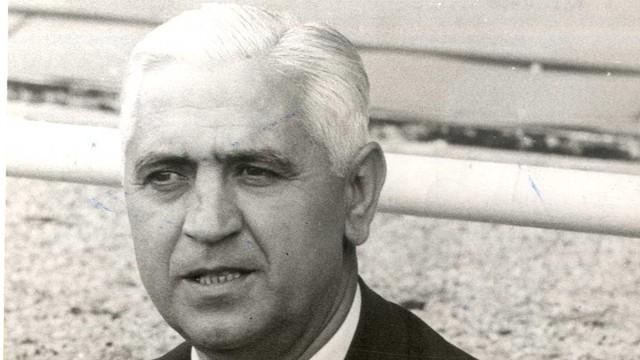
Early Life and Club CareerFerdinand Daučík was born on May 30, 1910, in Šahy, Slovakia. He began his football career with his hometown club, Slovan Šahy. After stints at MTK Komárom and Slovan Bratislava, he joined Slavia Prague in 1930. With Slavia, Daučík won two Czechoslovak championships and the Mitropa Cup in 1938.
International Career
Daučík made his debut for the Czechoslovak national team in 1931, becoming the third Slovak to represent the country. He participated in two World Cups: in 1934, where he was an unused substitute, and in 1938, where he played in all three matches.
Slovak National Team and Slovan Bratislava
After the German occupation of Czechoslovakia in 1938, Slovakia became an independent republic. Daučík returned to Slovakia and, in 1942, was appointed manager of Slovan Bratislava, which was renamed Bratislava. He also coached the Slovak national team, making his only appearance as a player for Slovakia in his first match as manager. Daučík led Slovan to two Slovak championships before resigning in 1946 due to concerns about his association with the fascist-backed Slovak government.
Return to Slovan and Emigration to Spain
After two years without a job, Daučík was reappointed as Slovan manager in 1948. He also briefly managed the Czechoslovak national team. In 1949, he emigrated to Spain, which was then under the authoritarian rule of Franco. His son-in-law, László Kubala, a Hungarian star who played for Slovan, joined him in Spain a year later.
"Hungaria" and Barcelona
To support their families, Daučík and Kubala formed Hungaria, an amateur team composed of refugees from Eastern Europe. With Kubala leading the attack and Daučík as coach, Hungaria achieved remarkable results, including victories over Italy and Spain. In 1951, Kubala joined Barcelona, and a few months later, Daučík was appointed as the club's manager, replacing Enrique Viola.
Legacy
Ferdinand Daučík's career spanned several decades and multiple countries. He was a gifted defender and a successful coach known for his tactical acumen. His story is a testament to resilience, adaptability, and the enduring power of football.