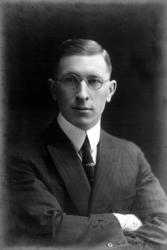
Ferdinand Klug
 Austria
- Birth and Early Education
- Physiological Research and Academic Career
- Notable Publications
- Contributions to Scientific Discourse
Birth and Early Education
Roger Klug, an Austrian physiologist, was born in Hungary. He pursued his education at the University of Budapest and the University of Vienna. In 1870, he obtained his doctorate in medicine.
Physiological Research and Academic Career
From 1871 to 1877, Klug served as an assistant at the Physiological Institute in Budapest. In 1878, he was appointed as an extraordinary professor of physiology. He later became the ordinary professor at the University of Kolozsvar and, in 1891, at the University of Budapest.
Throughout his career, Klug conducted extensive research in the field of human and animal physiology. His groundbreaking discovery that the ganglia of the heart contained only unipolar cells revolutionized the understanding of cardiac function. Additionally, he investigated the direction of cardiac contraction, demonstrating that it occurred from the apex to the base.
Notable Publications
Klug authored several significant scientific works, including:- "Das Cort'sche Organ" (1873)
- "Lehrbuch der Physiologie" (1888; 2nd ed., 1892): A textbook on physiology
- "Physiologie der Sinne" (1896): A treatise on the physiology of the senses
Contributions to Scientific Discourse
Klug's numerous scientific articles were published in German and Hungarian physiological journals, contributing significantly to the body of scientific knowledge in the field. His work continues to influence the understanding of human and animal physiology.