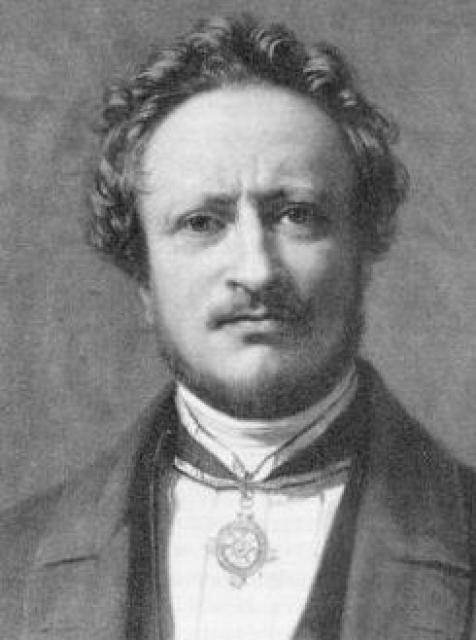
Johannes Muller
 Germany
Biography of Johannes Müller
Johannes Müller was a German scientist and one of the founders of modern physiology, comparative anatomy, and embryology. He was born on July 14, 1801 in Koblenz. Müller graduated from the University of Bonn in 1822 and went on to become a lecturer in 1824 and a professor of anatomy at the University of Bonn in 1826. In 1833, he assumed the position of professor of anatomy and director of the anatomical theater at the University of Berlin.
Scientific Contributions
Müller's scientific work was diverse, encompassing anatomy, physiology, embryology, comparative anatomy, histology, and paleontology. His main studies focused on the central nervous system, particularly the reflex activity of the spinal cord and medulla oblongata, as well as the sense organs. He made valuable observations on the visual organs and the sympathetic nervous system of invertebrates and conducted research on the classification of fish, amphibians, and birds.
In the field of sensory organ physiology, Müller adhered to the concept of "specific energy," which posited that sensations experienced by humans when perceiving the external world are not reflective of objective reality but rather manifestations of the internal properties of the sense organs themselves. However, the inadequacy of these views was demonstrated by the works of the Russian physiologist I.M. Sechenov.
Müller extensively utilized the microscope in his research. With its help, he studied the microscopic structure of connective, cartilaginous, and bone tissues, as well as the normal and pathological tissues of the kidneys. His comprehensive works on the fine structure and forms of tumors are well-known. Müller was also the first to attempt a classification of neoplasms based on the comparison of tumor structure and development.
Notable Achievements
Müller provided detailed descriptions of the human embryo at early stages of development, investigated the process of embryonic respiration, and discovered the embryonic ducts that were later named "Müllerian ducts" in his honor. He authored the renowned textbook "Handbuch der Physiologie des Menschen" (Handbook of Human Physiology) from 1834 to 1840, which went through several editions. This textbook introduced physiology as an experimental science for the first time.
Johannes Müller passed away in Berlin on April 28, 1858. His contributions to the fields of physiology, comparative anatomy, and embryology have had a lasting impact on the scientific community and continue to be studied and appreciated to this day.


