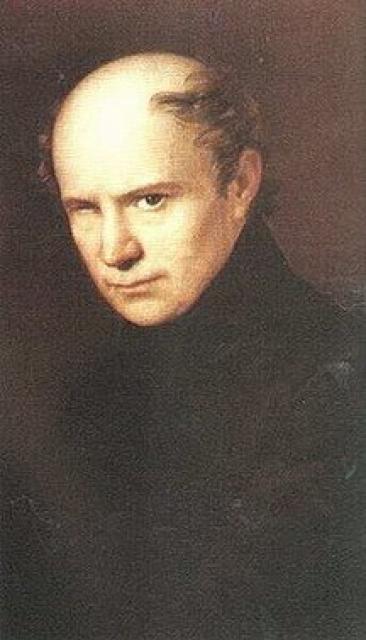
Ferenc Kolcsey
 Hungary
- Ferenc Kölcsey: Hungarian Writer and Literary Critic
- Literary Career
- Patriotic Sentiments
- Journalism and Activism
- Legacy
Ferenc Kölcsey: Hungarian Writer and Literary Critic
Early Life and EducationFerenc Kölcsey was born on August 8, 1790, into an aristocratic family in Transylvania. Raised in the Protestant faith, he attended the Debrecen College and later pursued law as his profession. The early passing of his parents had a profound impact on Kölcsey's eyesight and imbued him with a sense of melancholy.
Literary Career
Kölcsey's poetry was a harmonious blend of classicism, French Enlightenment, and German Romanticism. He became a prominent critic and political writer, demanding excellence from poets and displaying unwavering rigor in his critiques.
Patriotic Sentiments
Kölcsey was a fervent patriot with a profound love for his country, which was facing difficult times. In his epics "Song of Zrínyi" and "Second Song of Zrínyi," he voiced a pessimistic prophecy about the imminent end of Hungary as a unified nation under foreign invasion.
Journalism and Activism
In 1826, Kölcsey established the journal "Élet és Literatura" ("Life and Literature"), where he wrote extensively on philosophy, art history, and literary criticism. He also contributed to "Aurora," a publication founded by the Kisfaludy brothers. During the Diet of 1832-1836, Kölcsey emerged as a leading orator of the liberal party.
Legacy
Kölcsey's complete works were published by R. Szemere in 1863. His diary, written from 1832-1836, provides valuable insights into his personal life and political views.
Most notably, Kölcsey is celebrated for writing the Hungarian national anthem, "Himnusz" ("Hymn"), which has become an iconic symbol of the country's history and patriotism.
Kölcsey's contributions to Hungarian literature and politics have earned him a place among the most influential figures in the nation's history. His writings continue to resonate with Hungarians, inspiring a sense of national pride and preserving the legacy of a remarkable patriot and literary genius.


