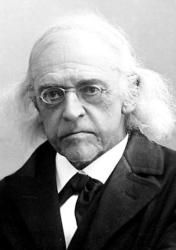
Fernand Braudel
 France
Biography of Fernand Braudel
Fernand Braudel was a French historian and a pioneer in the field of social sciences. He was born on August 24, 1902, in Lumeville, France, and grew up in a rural village where his father was a teacher. In 1908, his family moved to Paris, where Braudel attended school and eventually enrolled in the prestigious Sorbonne University.

Early Career and Academic Pursuits:
After completing his studies at the Sorbonne in 1923, Braudel hoped to secure a teaching position in his hometown. However, his aspirations were not fulfilled, and he began his career as a history teacher in Bar-le-Duc. During this time, he developed a strong interest in the study of Spain's history, contrary to the recommendations of his professors who suggested focusing on Germany. He conducted extensive research in Spanish archives and libraries, collecting historical material for his dissertation on Philip II, Spain, and the Mediterranean.

Influence of Lucien Febvre and the Annales School:
In 1932, Braudel started teaching in Paris and formed a close friendship and collaboration with Lucien Febvre, a professor at the College de France. Febvre and Marc Bloch founded the journal "Annales d'histoire économique et sociale" in 1929, which aimed to redefine the scope and methods of historical research. Braudel's career became closely intertwined with Febvre and the Annales School, which challenged traditional approaches to history by emphasizing the study of everyday life and long-term social and economic trends.
World War II and Captivity:
During World War II, Braudel served in the French army and was captured in 1940. He spent the next five years in prisoner-of-war camps, where he wrote his seminal work "The Mediterranean and the Mediterranean World in the Age of Philip II." Despite the challenging conditions, Braudel managed to continue his research and sent his notes to Febvre in France.
Academic Achievements and Legacy:
After the war, Braudel returned to France and worked at the Sorbonne. In 1947, he defended his dissertation and published his book on the Mediterranean, which established him as a leading figure in historical research. Braudel mentored a generation of renowned French historians, including Georges Duby, Marc Ferro, Francois Furet, Jacques Le Goff, and Emmanuel Leroy-Ladurie.
Braudel's innovative methodology and perspective revolutionized the field of history by introducing the concept of "longue durée" or long-term history. He emphasized the importance of analyzing geographical, demographic, and economic structures to understand the development of civilizations and societies. His approach laid the groundwork for interdisciplinary studies and had a significant impact on historiography worldwide.
Later Years and Contributions:
In 1970, Braudel left his position as the editor of "Annales" due to disagreements with his colleagues. He devoted his energy to the creation of the "Maison des sciences de l'homme," an open scientific center and library. Braudel continued his research and published his multi-volume work "Civilization and Capitalism" in the late 1970s.
Fernand Braudel passed away on November 28, 1985, in Cote d'Azur, France. His contributions to historical research and his redefinition of the subject matter and methods of the discipline continue to influence scholars worldwide. Despite the challenges that come with implementing his comprehensive research approach, Braudel's works remain exemplary for many historians and research groups.