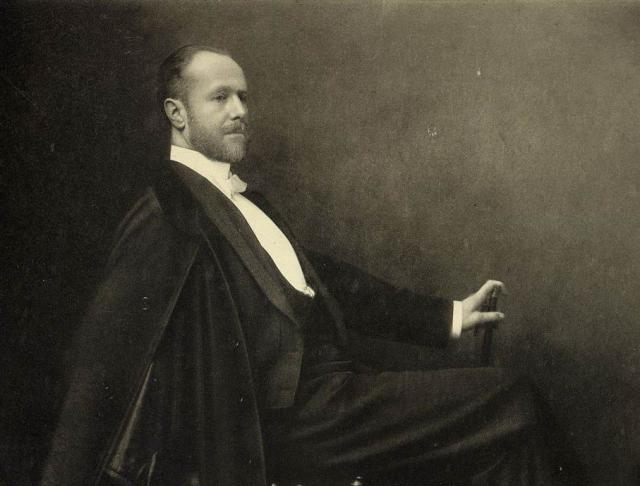
Fernand Khnopff
 Belgium
- Early Life and Education
- Artistic Influences and Paris Salon
- Symbolism and the Sociéte des XX
- Verhaeren's Portrayal
- Artistic Focus and Legacy
- Recognition and Awards
- Influence and Impact
Early Life and Education
Fernand Khnopff was born into an aristocratic Austrian family that had settled in Bruges, Belgium in the 16th century. His father, a judge, initially pressured Khnopff to study law at the Université Libre de Bruxelles. However, driven by his passion for art, Khnopff transferred to the Brussels Academy of Fine Arts.
Artistic Influences and Paris Salon
Khnopff's early influences included landscape and portraiture. In 1877, he visited Paris, where he encountered the works of Eugène Delacroix. In England, he met the Pre-Raphaelites, whose ethereal style deeply influenced his own.
Symbolism and the Sociéte des XX
In 1878, Khnopff met the symbolist painter Gustave Moreau, who inspired him to embrace symbolism. He became one of the founders of the avant-garde group Sociéte des XX. Khnopff's evocative paintings featured mystical themes and somber, morbid tones.
Verhaeren's Portrayal
Poet and critic Émile Verhaeren described Khnopff as a "secular dandy" with "penetrating metallic eyes, a slightly pointed chin, a disdainful mouth... impeccable costume, simplicity of manner. An aversion to slovenliness. A former pastor, almost transformed into a dandy."
Artistic Focus and Legacy
Khnopff's artistic repertoire included sculpture, pastel, tinted drawings, engraving, and theatrical design. He produced numerous series depicting the deserted streets of Bruges. His enigmatic depictions of female figures as sphinxes and chimeras, such as "The Sleeping Harpy" and "Solitude," remain iconic.
Recognition and Awards
Despite his introverted nature, Khnopff eventually gained recognition and accolades. He participated in the Salon de la Rose-Croix and the Vienna Secession. In 1892, he was awarded the Belgian Order of Leopold.
Influence and Impact
Khnopff's symbolism influenced German symbolists, such as Franz von Stuck, and the Jugendstil movement. His distinctive imagery and evocative use of color continue to captivate audiences to this day.


