Ferruccio Busoni
 Italy
Italy- Ferruccio Busoni: A Musical Genius
- Early Prodigy
- Education and Early Career
- Expansion of Tonality
- Berlin Legacy
- Pianistic Innovations
- Aesthetic Theory
- Operatic Experiments
- Later Years and Legacy
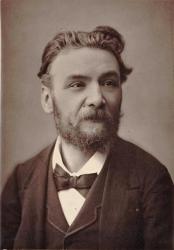
Ferruccio Busoni: A Musical Genius
Born in Empoli, Tuscany, on April 1, 1866, Ferruccio Dante Michelangelo Benvenuto Busoni's life and career were marked by prodigious talent and groundbreaking ideas.
Early Prodigy
As the son of clarinet virtuoso Ferdinando Busoni, Ferruccio began piano lessons at a tender age. By eight, he had given his first concert in Trieste, and two years later, he performed his own compositions in Vienna. At the age of 12, he premiered his "Stabat Mater" in Graz, where his family had recently settled.
Education and Early Career
In 1881, Busoni joined the Philharmonic Academy in Bologna. Recommended by Johannes Brahms, he studied with Karl Reinecke in Leipzig in 1886, where he delved into Bach's music. He later taught in Helsinki, where Jean Sibelius was among his students, and in 1890, at the Moscow Conservatory, where he married Swedish soprano Gerda Sjöstrand. In the same year, he won the Rubinstein Competition in Saint Petersburg with his concert piece, Op. 31a.
Expansion of Tonality
Busoni's 1891 departure from Moscow to the New England Conservatory in Boston marked a significant shift in his approach to music. He became increasingly concerned with expanding the tonal and pianistic possibilities of artistic expression.
Berlin Legacy
In 1894, Busoni settled in Berlin, where he found a receptive audience for his ideas of a new "young classicism." Through his Berlin concerts, beginning in 1902, he introduced new and unfamiliar works by such composers as Béla Bartók, Sibelius, and Schönberg.
Pianistic Innovations
Busoni's exploration of new formal structures and expressive means manifested in works such as his Piano Concerto with Final Chorus (1906) and the Third Piano Sonata (1910), which challenged the boundaries of tonal music. His Second Sonatina (1912) embraced atonality, reflecting the influence of Schönberg.
Aesthetic Theory
Busoni's desire for a new classicism coincided with his search for fresh principles in contemporary music. In 1907, he published his "Sketch for a New Aesthetic in Music," dedicated to poet Rainer Maria Rilke, sparking fierce debate.
Operatic Experiments
While adhering to traditional classical forms, Busoni sought to detach music from the narrative in his operas. His "Turandot" (1917), based on the play by Carlo Gozzi, exemplified this concept. In "Arlecchino" (1917), he blended elements of Italian commedia dell'arte with innovative musical language.
Later Years and Legacy
After taking over the directorship of the Bologna Conservatory in 1913, Busoni embarked on a project to compose an opera based on Goethe's "Doctor Faustus." The outbreak of World War I forced him to relocate to Zurich, where he completed the two-act opera "Turandot" (1917). However, he passed away in Berlin in 1924 at the age of 58 before completing "Doctor Faustus." His pupil Philipp Jarnach later realized the opera's orchestration, which premiered in 1925.
Ferruccio Busoni's legacy as a composer, pianist, and theorist continues to inspire musicians today. His groundbreaking ideas, his virtuosic performances, and his exploration of musical boundaries have left an indelible mark on the world of music.