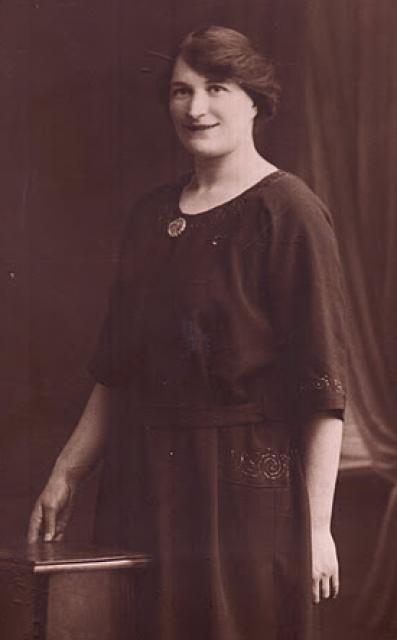
Flora MacKenzie
 New Zealand
Biography of Flora MacKenzie
Flora MacKenzie was a New Zealand fashion designer and the owner of a brothel, who spent most of her life in Auckland, New Zealand. She was born on August 15, 1902, the daughter of Sir Hugh Ross MacKenzie, a farmer and horse breeder, and his wife Lillie Theresa Ellett. Flora, along with her brother and sister, was raised on her parents' horse breeding farm in Mangere, a suburb in the northern part of Auckland.
Flora's father, who was an active member of the local road board and the Auckland Riding Club, later became the chairman of the Auckland Harbour Board. In February 1927, Sir Hugh officially welcomed the Duke and Duchess of York when they arrived in Auckland.
After finishing school, Flora initially pursued nursing but had difficulty conforming to the strict discipline requirements and strained relations with her supervisors, which led to her departure. In the meantime, she discovered her talent for dressmaking and opened a boutique called 'Ninette' on Vulcan Lane in Auckland, specializing in wedding dresses and accessories. The store quickly became very successful, attracting affluent clients from the thriving suburbs of Auckland, including the wives of New Zealand cabinet ministers.
Flora often sketched her designs in watercolor. After her death, some of these sketches were framed and sold in one of Auckland's galleries, reportedly to former clients of her second business, a brothel in Ponsonby's Ring Terrace. Flora enthusiastically embraced the "roaring twenties" and the era of sexual freedom that accompanied it. She soon realized that there were other young women who needed a secluded sanctuary where they could meet men without interference. Over time, most likely starting in the 1940s, this endeavor evolved into a network of sexual services.
Flora's father understood that she would likely never get married and acquired property in Ponsonby for her. When the United States entered World War II, New Zealand experienced an influx of American servicemen fighting in the Pacific theater. Flora lived in her new home for about six months before realizing that it housed several "working girls." A talented organizer, she soon took on the role of running the brothel. Eager to meet the needs of the Allies, Flora managed her establishment cautiously and prudently. The women living and working in her brothel underwent regular medical check-ups. Flora lived in the same building, in apartments with waterbeds, and had a romance with a naval lieutenant who did not return from the war.
Towards the end of the war, Flora's establishment transformed into an exclusive club serving affluent businessmen in Auckland and other privileged clientele. It became the most well-known establishment in Auckland, if not all of New Zealand. However, Flora disliked the terms "brothel" and "prostitutes" and preferred to describe her business as "sex therapy."
Although Flora was supposed to stand trial from 1962 to 1976 for living off the earnings of prostitution, the jury twice failed to reach a unanimous verdict, and Flora was never sentenced. When a court inspection went to her house to witness the debauchery firsthand, they found something resembling a dormitory for young women, with a large Bible on each single bed. Flora had an excellent sense of humor. Unfortunately, she was an alcoholic and sought help from Alcoholics Anonymous, but without success. This, however, did not prevent Flora from living to a ripe old age. She was also a great lover of animals and adored her Pekingese dogs.
When Flora died at the age of 80 on July 8, 1982, her funeral was very quiet because there was no announcement of her death in the newspapers. She suffered from a weak heart and liver cirrhosis for many years, enduring constant pain. Flora never married or had children, and it was rumored that she bequeathed her property to the person who sent her a weekly box of whiskey. Despite her unconventional "occupation" (or perhaps because of it), she became one of Auckland's landmarks.


