
Florence Rena Sabin
 USA
USABiography of Florence Rena Sabin
Early Life and EducationFlorence Rena Sabin was born in Central City, Colorado, as the youngest daughter of mining engineer George K. Sabin and his wife Serena Miner. When Florence was only 7 years old, her mother passed away from childbirth fever. She, along with her sister Mary, went to live with their uncle in Chicago, and later with their grandparents in Vermont. In 1893, Florence received her bachelor's degree from Smith College. She worked as a mathematics teacher in Denver for two years and taught a course on zoology at Smith College for another year, saving up money for her medical education.

Medical Career
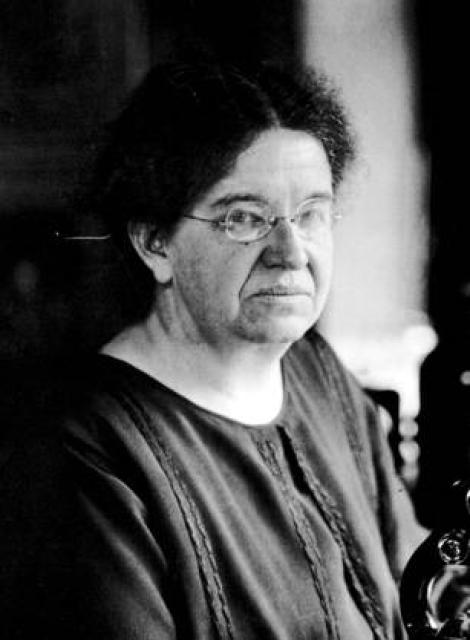
Florence enrolled in the Johns Hopkins School of Medicine, becoming the first woman to graduate from the institution. She gained practical experience at the Johns Hopkins Hospital under the guidance of Sir William Osler. Florence's exceptional observational skills and meticulousness caught the attention of fellow physician Franklin P. Mall. He inspired her to participate in two promising scientific projects. After working with Osler for a year, Florence pursued her alma mater's anatomy department. By 1902, she was already teaching at the faculty. In 1905, she became an associate professor, and in 1917, Florence became a full professor of embryology and histology. She was the first woman to hold a professorship at a medical college.
Achievements and Contributions
In 1924, Florence became the first woman president of the American Association of Anatomists and the first living woman elected as a member of the National Academy of Sciences. In September 1925, she became the head of the Department of Cellular Studies at the Rockefeller Institute for Medical Research. Her research focused on the lymphatic system, blood vessels, and tuberculosis. Florence retired in 1938 but remained active in her field. In 1944, she accepted an offer from Colorado Governor John Vivian to lead his subcommittee on health issues. Florence realized that the state's healthcare problems were receiving insufficient attention and took action to address them. She engaged in political battles to raise awareness among her colleagues.
Legacy
Florence retired for the final time in 1951 but continued writing articles and giving speeches on healthcare topics. On October 3, 1953, she passed away from a heart attack at the age of 82. In 2005, the Johns Hopkins University School of Medicine named one of its colleges in honor of Florence Rena Sabin. Her contributions to medicine and her pioneering achievements as a woman scientist continue to inspire future generations.



