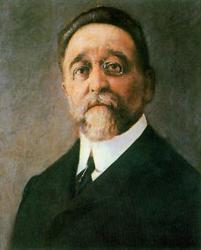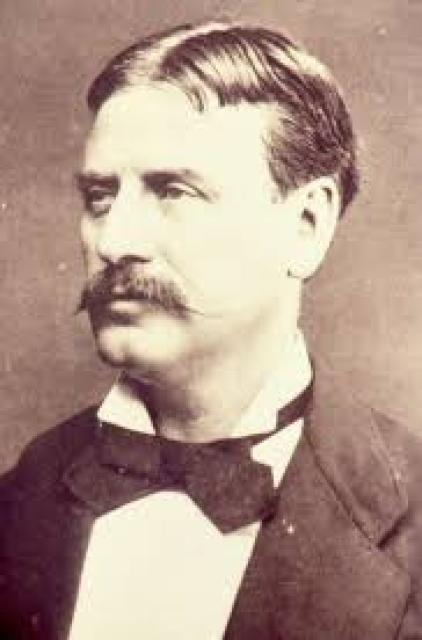
Florimond Herve
 France
- Florimond Hervé: Pioneer of French Operetta
- Musical Journey
- Establishment of Folies-Nouvelles
- Parodies and Popular Success
- "Mam'zelle Nitouche"
- Legacy and Influence
Florimond Hervé: Pioneer of French Operetta
Early Life and EducationFlorimond Hervé, born as Florimond Ronger-Hervé, was a French composer and organist who played a pivotal role in the development of musical theatre. Born in 1825 in the town of Houdain near Arras, he began singing in the church choir at a young age. With an exceptional tenor voice that he retained throughout his life, Hervé pursued his musical education at the Paris Conservatory under the tutelage of Daniel Auber.
Musical Journey
Hervé's early career involved positions as an organist and choirmaster at a church near a psychiatric hospital in Bicêtre. While secretly pursuing a career in musical theatre as an actor, singer, composer, and director, he innovated through music therapy with patients at the clinic. This unique experience later served as inspiration for his renowned operetta, "Mam'zelle Nitouche."
In 1845, Hervé won the competition to become the organist at the Parisian church of Saint-Eustache. However, as his musical compositions gained success, he fully dedicated his life to musical theatre. Using the pseudonym "Hervé," he debuted in 1848 with the one-act musical burlesque "Don Quichotte et Sancho Panza," which received popular acclaim amidst revolutionary unrest. This performance is often considered the first French operetta.
Establishment of Folies-Nouvelles
In 1851, Hervé became the conductor and orchestra director at the Théâtre du Palais-Royal. Shortly after, he opened his own theatre, which greatly influenced the formation and development of the operetta genre. In 1855, he transformed the café-chantant "Folie-Mayer" into "Folies concertantes," later renamed "Folies-Nouvelles," where he wrote and staged new operettas.
The word "folie" (madness) became synonymous with Hervé's theatre, known for its exuberant and satirical productions. He premiered one of Jacques Offenbach's early works, "Orphée aux Enfers" (Orpheus in the Underworld). Despite initial rivalry with Offenbach, they eventually reconciled in 1878 when Hervé performed in Offenbach's opera.
Parodies and Popular Success
Throughout the 1860s, Hervé's theatre, renamed "Folies-Dramatique," specialized in parodies of popular operas, such as "Guillaume Tell" by Rossini, "Faust" by Gounod, and "Robert le Diable" by Meyerbeer. These operettas featured witty and absurd humor, mocking the conventions of grand opera and using colloquial language.
"Mam'zelle Nitouche"
In 1883, at the age of 58, Hervé composed his most renowned operetta, "Mam'zelle Nitouche." Unlike his earlier works, this operetta exhibited genuine lyricism and musical maturity. The title role was specifically written for the celebrated actress Anna Judic, who ensured its immense success.
Legacy and Influence
Hervé is recognized as the creator of the "opérette-bouffe," a genre characterized by its satirical and farcical elements. His early one-act burlesques paved the way for the development of the modern operetta. Despite limitations imposed by authorities to avoid competition with the Opéra-Comique, Hervé cleverly circumvented these restrictions by incorporating mutes, dolls, and even a singing severed head.
Hervé's fascination with the origins of his genre led him to research the archives of the Théâtre des Variétés. He believed that operetta had its roots in the late 18th century, during the French Revolution, and that he and Offenbach had merely revived it.