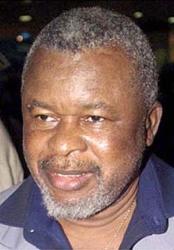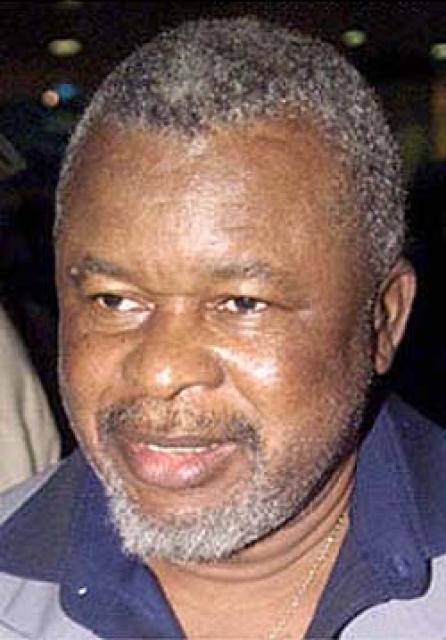
Fodey Sanko
Foday Sankoh was a former Sierra Leonean army corporal who founded and led the Revolutionary United Front (RUF), the rebel movement that launched Sierra Leone’s civil war in 1991. He presented the uprising as a revolution against corruption and inequality, but the conflict became notorious for systematic violence against civilians. Sankoh was detained in 2000 and died before the Special Court for Sierra Leone could try him on war-crimes charges, leaving his political and military record closely bound to the devastation inflicted on the country.
Early Life and Military Service
Foday Saybana Sankoh was born in 1937 in Sierra Leone. He joined the country’s armed forces as a young man and served for about 15 years, reaching the rank of corporal. After leaving the army, he worked as a photographer in the eastern districts of Kenema and Kailahun. In 1971, he was arrested in connection with a group accused of plotting against the government and spent several years in prison. The episode later figured prominently in his own account of his political awakening.
Formation of the Revolutionary United Front
In the late 1980s, Sankoh traveled to Libya, where he received military training and developed plans for an armed movement. There he encountered Liberian rebel leader Charles Taylor, whose forces later supported the RUF. In March 1991, the RUF crossed into Sierra Leone from Liberia and began its insurgency. Sankoh became the movement’s central political leader, presenting it as a campaign against a corrupt political order and the exclusion of ordinary people.
The RUF’s advance and the government’s response drew Sierra Leone into an eleven-year civil war. The movement’s forces seized territory and diamond-producing areas, while civilians faced killings, abductions, forced recruitment, sexual violence, forced labor and the mutilation of limbs. Sierra Leone’s Truth and Reconciliation Commission documented widespread abuses and examined Sankoh’s authority over the movement and the conduct of its commanders. The war’s impact reached far beyond the battlefield, displacing communities and leaving deep social and economic damage.
Peace Efforts, Arrest and Death
Sankoh signed the 1996 Abidjan peace agreement with President Ahmad Tejan Kabbah, but the accord did not end the conflict. A second major agreement, the 1999 Lomé Peace Accord, attempted to bring the RUF into a political settlement. Under its terms, Sankoh was to lead a commission overseeing strategic resources and reconstruction. Fighting and ceasefire violations continued, however, and the agreement soon unraveled.
In May 2000, after a protest outside his residence in Freetown, violence left demonstrators dead and wounded. Sankoh was captured and detained by Sierra Leonean authorities. In March 2003, he was transferred to the Special Court for Sierra Leone and indicted on charges including crimes against humanity and war crimes related to the conflict. He died in a Freetown hospital on July 29, 2003, after a series of strokes, before the charges could be heard at trial. The prosecutor later withdrew the indictment. As a result, Sankoh was never convicted by the Special Court, though the Truth and Reconciliation Commission’s record and the cases against other RUF figures documented the movement’s abuses.
Legacy
Sankoh remains one of the most consequential and divisive figures in Sierra Leone’s recent history. Supporters once echoed his language of revolution and resource justice; for many survivors, his name is inseparable from the violence carried out by the RUF. His death before trial meant that the court did not hear a full case against him, while Sierra Leone’s truth commission became a central record of the conflict’s causes, crimes and lasting human cost.