Ali Salyame
 Israel
- Family and Political Beginnings
- Black September and the Munich Attack
- The Lillehammer Mistake
- Death in Beirut
- Legacy
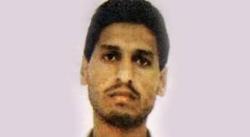
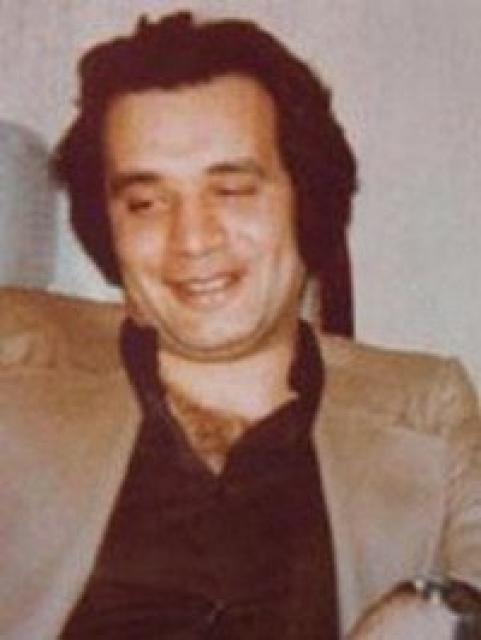
Ali Hassan Salameh, known by the nom de guerre Abu Hassan and nicknamed the “Red Prince” in foreign reporting, became one of the most prominent security figures around Palestine Liberation Organization leader Yasser Arafat. Israeli authorities identified him as a senior operations figure in Black September, the militant group responsible for the 1972 Munich Olympics attack in which 11 Israeli team members were killed. After years of pursuit, Israel’s Mossad killed him with a car bomb in Beirut in 1979.
Family and Political Beginnings
Salameh was born in 1940, according to many Arabic and Palestinian biographical accounts, though other sources give 1941 and some place his birth in Iraq rather than Palestine. He was the son of Hassan Salameh, a Palestinian Arab commander who was killed during the 1948 war. Ali grew up amid the political upheavals that shaped Palestinian national movements and later studied in Cairo, where accounts differ on the precise institution and subject of his degree.
By the 1960s, he had joined Fatah, the Palestinian nationalist movement that became the largest faction within the PLO. He rose within its security network and became a trusted associate of Arafat. His role involved protecting senior leaders and developing intelligence and counterintelligence capabilities. Salameh was described by supporters as a disciplined organizer; Israeli and Western accounts portrayed him as a key architect of armed operations.
Black September and the Munich Attack
Black September emerged from the upheaval following the 1970–71 conflict between the Jordanian state and Palestinian armed groups, after which many Palestinian fighters relocated to Lebanon. The organization carried out attacks against Israeli and Jordanian targets. Its most notorious operation came at the 1972 Summer Olympics in Munich, where gunmen took members of the Israeli team hostage. The crisis ended with the deaths of 11 Israeli hostages, five Palestinian attackers, and a German police officer.
Israel’s government and intelligence services accused Salameh of helping plan the Munich operation and placed him among the principal targets in their campaign against people they believed responsible. He was widely described in contemporary reporting as Black September’s chief of operations, though the precise extent of his personal role has remained difficult to document publicly. He was not tried in court for the attack; the claims about his role came through intelligence assessments, official accusations, and later accounts.
Salameh became Arafat’s security chief and was associated with Force 17, a unit responsible for protecting PLO leaders. His influence extended beyond armed operations. Accounts of the period describe him as a contact between the PLO and the CIA, including through CIA officer Robert Ames, during a time when Washington officially avoided direct dealings with the PLO. The relationship reflected the overlapping and sometimes contradictory intelligence channels of the Cold War, and its details are drawn largely from later reporting and memoirs.
The Lillehammer Mistake
The Israeli pursuit of Salameh produced a grave error in Norway in 1973. Mossad agents, believing they had found him in Lillehammer, shot and killed Ahmed Bouchiki, a Moroccan waiter who had no connection to the Munich attack. Norwegian authorities arrested members of the Israeli team, and the case became an international scandal. Salameh had not been killed and remained a target for several more years.
Death in Beirut
On January 22, 1979, a remotely detonated car bomb exploded as Salameh’s convoy passed through Beirut. He and several others were killed, and bystanders were wounded. Israel did not publicly acknowledge responsibility at the time, but later accounts and historical research attribute the operation to Mossad as part of the post-Munich assassination campaign. His funeral drew a large crowd, and Arafat attended, underscoring Salameh’s standing within the PLO’s inner circle.
Legacy
Salameh remains a deeply contested figure. For Palestinians who viewed him as a defender of their movement and its leadership, he was a prominent security operative killed by a foreign intelligence service. For Israelis and families of those killed at Munich, he was a central figure in the network blamed for the massacre. The evidence about his exact role has been shaped by secrecy and competing political narratives, but his importance in the history of Palestinian militant organizations, PLO security, and Israel’s retaliatory campaign is beyond doubt. His life also sits at the center of a moral and political contradiction: he was simultaneously a wanted operative and, according to later reporting, a confidential interlocutor for a U.S. intelligence officer.