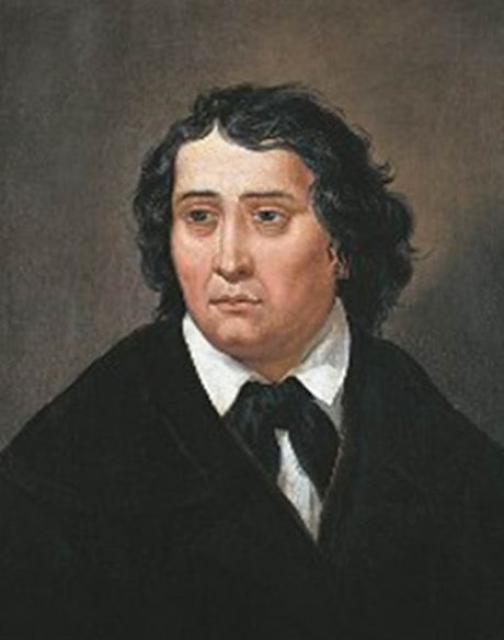
France Preseren
 Slovenia
Biography of France Prešeren
France Prešeren, an exceptional Slovenian poet, was born in 1800 in the village of Vrba, which was then part of the Austrian Empire and is now in Slovenia. Although coming from a wealthy peasant family, Prešeren displayed a talent for learning at a young age. In 1812, he moved to Ljubljana and enrolled in a state grammar school, where he excelled in his studies. Prešeren mastered Latin, Ancient Greek, and German, which was considered the language of educated individuals at the time.
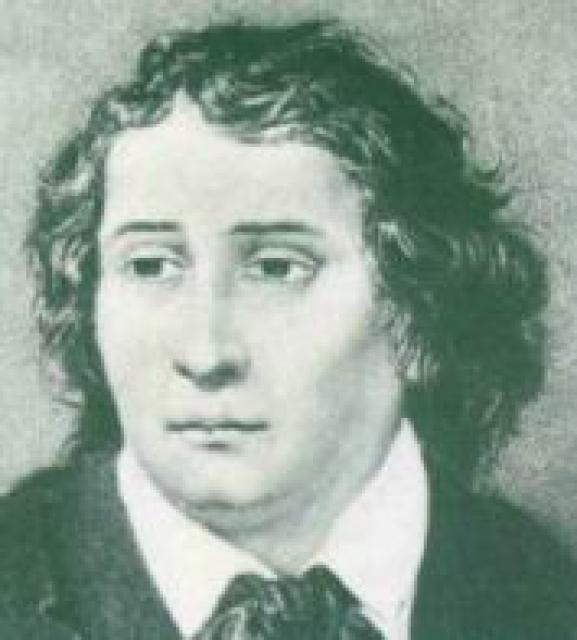
In Ljubljana, Prešeren's talent was recognized by poet Valentin Vodnik, who encouraged him to develop his literary abilities in the Slovenian language. Prešeren had been composing poetry since his youth. In 1821, he became a student at the University of Vienna, where he studied philosophy and law. In Vienna, Prešeren was captivated by the works of great writers ranging from Homer to Goethe, but he was particularly enchanted by Dante, Petrarch, and Boccaccio. He also read contemporary Romantic poets, and his liberal views led to him being denied a teaching position.
Obtaining a license to practice law proved to be a challenging endeavor for Prešeren, as he was considered politically unreliable. In 1828, he returned to Ljubljana and found employment as an assistant to lawyer Leopold Baumgartner. Despite his aspirations of becoming an independent lawyer, Prešeren made six unsuccessful attempts to achieve this goal.
In the spring of 1833, Prešeren met Julija Primic, the daughter of a wealthy merchant, who became the unrequited love of his life. By approximately 1836, Prešeren realized that his love for Julija would never be reciprocated, and that same year he met and grew close to Ana Jelovšek. Despite having three children with Ana, he never married her. Prešeren had an unconventional view of marriage and engaged in numerous extramarital affairs. During this period, he traveled extensively throughout his homeland, finding poetic inspiration in nature.
In 1846, Prešeren finally managed to open his own law firm and moved to Kranj with his family. However, his life as a poet was tragically short-lived. Prešeren passed away on February 8, 1849, before reaching the age of 50. On his deathbed, he confessed that he had never forgotten Julija.
Prešeren's life is often considered unhappy. He faced constant rejection and disappointment throughout his life. His love life was marked by unrequited love, and he lost many friends whose lives ended tragically. Prešeren continually clashed with civil and religious institutions, as well as the provincial bourgeoisie of Ljubljana. His only collection of poems, published in 1847, was heavily censored.
Despite the challenges he faced, Prešeren is now regarded as the greatest poet in Slovenian history. His expressive and diverse poems elevated Slovenian poetry to the European level within the framework of Romanticism. His most famous poem, "Sonnet Wreath" ("Sonetni Venec"), written in 1834, has been translated into multiple languages, including Russian.
After his death, Prešeren's works gained increasing recognition and popularity. He was honored as the national poet of Slovenia, and his poems gained significant importance in his homeland. In 1905, a monument to Prešeren was erected in the central square of Ljubljana, which was subsequently renamed in his honor. One stanza from Prešeren's poem "Zdravljica" became Slovenia's national anthem in 1989.
Prešeren's portrait appeared on the 1000-tolar banknotes that were withdrawn from circulation in 2007. Additionally, his portrait is featured on 2-euro coins minted in Slovenia. The Prešeren Award, named after the poet, is the highest Slovenian honor for creative achievements.




