Salvatore Quazimodo
 Italy
ItalyBiography of Salvatore Quasimodo
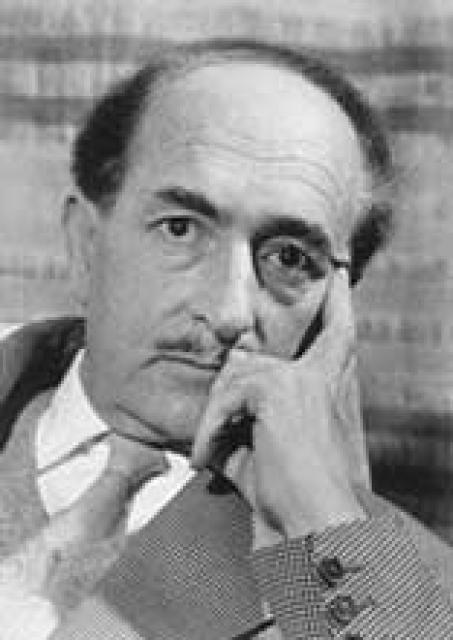
Salvatore Quasimodo was an Italian poet and Nobel laureate in 1959. He was born in Modica, a small town near Syracuse, Sicily. His father, Gaetano Quasimodo, was the chief of a railway station, which led to the family frequently moving from one Sicilian town to another. In 1916, Salvatore and his older brother entered a technical school in Messina, where the family was living at the time. Although Salvatore wanted to attend a classical high school, his parents decided to give their children a technical education, considering it more practical. During this time, Salvatore became interested in poetry, started reading classical and contemporary literature from Russia and France, and published his first poems. He also co-founded a short-lived newspaper with his friends. In 1919, Salvatore left Messina and enrolled in the Polytechnic Institute of Rome. However, due to financial difficulties, he dropped out and received a diploma as a surveyor. In 1920, he married Bice Donetti and started taking literature seriously, supported by Monsignor Rampolla, a Sicilian priest in Rome. The future writer studied Greek and Latin and, unsure of his literary abilities, worked in a profession that required technical knowledge. From 1926, Salvatore worked in the Ministry of Civil Engineering, traveling extensively throughout the country. He had open animosity towards the fascists, which prevented him from pursuing a career in journalism but motivated him to start writing poetry seriously. In 1929, Salvatore's brother-in-law, Elio Vittorini, who later became a renowned novelist, critic, and translator, introduced him to literary circles in Florence, where Salvatore met poets Eugenio Montale and Giuseppe Ungaretti, as well as Alessandro Bonsanti, the editor of the journal "Solaria," where several poems by the young poet were published.
In 1930, Bonsanti financed the publication of Salvatore's first poetry collection, "Water and Earth," which contained many poems dedicated to Sicily, particularly the masterpiece "Wind over Tindari." The influence of hermeticism, a poetic movement characterized by encrypted imagery, a cult of words, and a strict intellectualism, can already be felt in Salvatore's first collection. His poetry embraced the concept of "the magic of words," the belief that words are autonomous and carry more than descriptive functions. Over the next few years, Salvatore released several poetry collections, including "The Sunken Oboe" (1932), "The Scent of Eucalyptus and Other Poems" (1933), "Erato and Apollo" (1936), and "Poems" (1938), which marked the transition from realism to hermeticism. In 1932, just one year after Montale, Salvatore was awarded the Florentine prize "Antico Fattore," and in 1934, he moved to Milan, where he joined a group of intellectuals from southern Italy called the "young emigrants." During this time, Salvatore became involved with Amelia Speziali, and they had a daughter named Orietta in 1935.
In 1938, Salvatore resigned from the Ministry of Civil Engineering and became an assistant to Cesare Zavattini, the editor of several periodicals owned by Mondadori Publishing, and in the following year, he became the editor of the weekly magazine "Il Tempo." In the same year, he had a son, Alessandro, with the dancer Maria Cumani. During this period, Salvatore focused on translations, and his book "Greek Lyrics" (1940), translating ancient Greek poetry into modern Italian, was published. In 1941, Salvatore became a professor of Italian literature at the Giuseppe Verdi Conservatory in Milan, and in 1942, he released a collection of selected and revised poems titled "And Suddenly It's Evening." The horrors of the Second World War and the suffering that befell Italy deeply affected Salvatore and led to a change in his poetic style, shifting his focus to social issues. He participated in the Resistance movement and spent some time in Bergamo prison for his anti-fascist activities. It was during this time that his poetry evolved from hermeticism to an active creative position, as noted by critic S. McCormick.
In 1945, Salvatore joined the Italian Communist Party but soon left when they demanded him to write political poems. In the post-war years, he wrote essays, poems, and translated extensively. He published the influential poetry collection "Day After Day" (1947), which served as a program for his creative evolution. After the death of his first wife in 1948, Salvatore married Maria Cumani. During this time, he also started writing theater articles for publications such as "Omnius" and "Il Tempo." In 1956, he released the poetry collection "False and Genuine Green" (Il falso e vero verde), which was preceded by the programmatic essay "Thoughts on Poetry" (Discorso sulla poesia), asserting that a poet must express their ideological views in their verses. At the end of 1958, Salvatore visited the USSR, where he stayed until May of the following year due to illness.
Despite being highly regarded in literary circles, Salvatore was not considered the most significant Italian poet, making the announcement of him being awarded the Nobel Prize in Literature for 1959 a surprise. He received the prize for his "lyrical poetry, which with classical vividness expresses the tragic experience of our time." In his acceptance speech, Salvatore stated that "poetry is born in solitude and... from this solitude spreads in all directions... Poetry, even lyrical poetry, is always 'speech.' The listener can be anyone: the poet himself, his spirit, a passerby, or thousands of people." In 1960, Salvatore divorced his second wife. In the 1960s, he published the collection of essays "The Poet and the Politician and Other Essays" (1960) and his final poetry collection, "To Give and to Have" (1966). Salvatore died suddenly from a cerebral hemorrhage in 1968 during the Amalfi poetry festival, where he served as the jury chairman.
While many contemporary critics consider Salvatore a significant representative of hermeticism, he falls short in comparison to Montale and Ungaretti. In 1959, American scholar Glauco Cambon noted that "Salvatore Quasimodo occupies an important place [among] modern Italian poets, although his recent books often disappoint." In an article published in "Books Abroad" a year later, critic Francis Golffing called Salvatore "a quite simple poet by comparison with such masters as Montale, Eliot, and Yeats." At the same time, English literary scholar C. Bauer wrote in 1960 that Salvatore, "as no other modern poet, speaks in the name of all Europe." Salvatore is also widely known for his critical essays, librettos, and translations of Shakespeare and ancient authors such as Homer, Aeschylus, Sophocles, Virgil, and Catullus, as well as contemporary European and American poets like Pablo Neruda.
In addition to the Nobel Prize, Salvatore received the Etna-Taormina Poetry Prize jointly with Dylan Thomas in 1953, the Viareggio Prize in 1958, and an honorary degree from the University of Oxford in 1967.