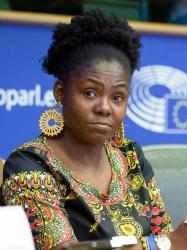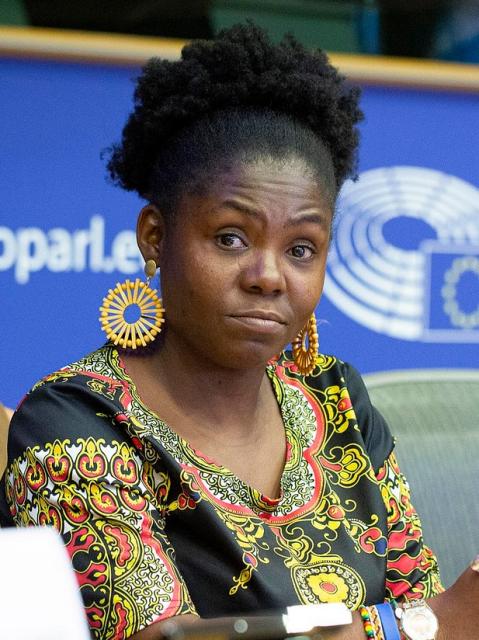
Francia Elena Marquez
 Colombia
Francia Elena Márquez Mina (born 1 December 1982) is a Colombian environmental and human rights advocate who rose from community organizing in Cauca to national political leadership. An Afro-Colombian leader from La Toma, she became known for defending ancestral land and opposing illegal gold mining. In 2022 she was elected Colombia’s first Afro-Colombian vice president, serving from 2022 to 2026, and also became the country’s first Minister of Equality and Equity.
Roots in La Toma
Márquez was born in Yolombó, a rural settlement in the district of La Toma, in the municipality of Suárez, Cauca. She grew up in an Afro-Colombian community whose connection to the land and local rivers shaped her understanding of environmental protection and collective rights. As a young woman, she became involved in community efforts to defend the territory and the people who depended on it.
Her activism developed in response to threats from mining and development projects affecting the region. In La Toma, community members sought recognition of their ancestral land rights and the right to be consulted before projects moved forward. Márquez became a visible advocate for those demands, using legal action, public organizing and local leadership to challenge decisions made without the community’s consent.
Organizing against illegal mining
In 2009 and 2010, Márquez and other community representatives pursued legal action over mining concessions in the region, arguing that the community’s rights to consultation and territorial autonomy had been violated. Illegal gold mining also brought environmental damage and risks to local residents.
In November 2014, she helped lead a 10-day march of about 80 women from La Toma to Bogotá, a journey of roughly 350 kilometers. The march brought national attention to illegal mining in Cauca and called on the government to protect the community’s ancestral territory. An agreement followed between the government and La Toma, and illegal miners and their equipment were removed from the area.
The effort made Márquez a prominent voice in Colombia’s environmental movement. In 2015 she received a national human rights award. In 2018, the Goldman Environmental Prize recognized her work organizing women to defend their land and stop illegal gold mining. She also took part in peace-process discussions as a representative of communities affected by Colombia’s armed conflict. Her advocacy carried personal risks: she faced threats and at times had to leave her home region for safety.
Education and political path
Márquez studied law at the Universidad Santiago de Cali and graduated in 2020. She had worked as a domestic worker while pursuing her education, seeking legal tools that could help her community defend its rights. That combination of grassroots organizing and legal training informed her political work.
In 2022, she entered the presidential primary of the left-wing Pacto Histórico coalition. Her strong showing brought her national attention, and Gustavo Petro selected her as his running mate. The pair won the election in June, and Márquez took office in August as Colombia’s first Afro-Colombian vice president and only its second woman to hold the position. During her term, she also led the newly established Ministry of Equality and Equity, becoming its first minister.
Her campaign connected social inclusion with environmental and racial justice. The phrase “vivir sabroso,” associated with her public message, expressed an aspiration for people to live with dignity, peace and well-being. She spoke for communities that had often been excluded from national decision-making, while her rise to high office also made her a symbol of changing representation in Colombian politics.
Public role and legacy
Márquez’s political journey brought the concerns of Afro-Colombian communities, environmental defenders and residents of Colombia’s rural regions onto the national stage. Her work as an activist began with a local struggle over land and water; it later shaped her electoral platform and her role in government.
Her legacy is tied to that path from La Toma to the vice presidency. The march to Bogotá showed how organized community action could force a national conversation, while the Goldman Prize and her election brought global attention to the people and causes she represented. Through activism, legal advocacy and public office, Márquez has remained associated with the demand that development respect communities, their environment and their right to shape their own future.