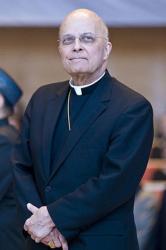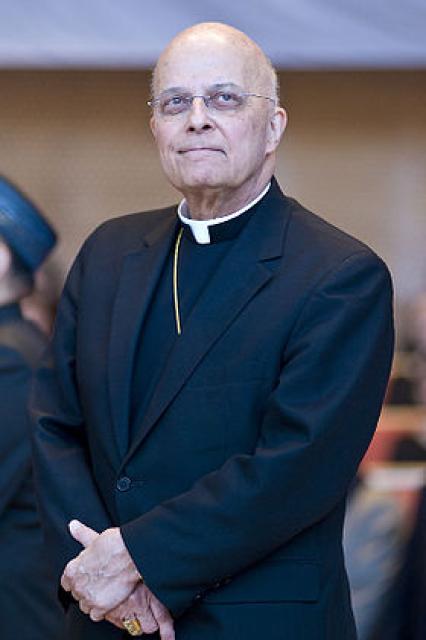
Francis Eugene George
 USA
Francis Eugene George was an American Catholic cardinal, theologian, and missionary priest who led the Archdiocese of Chicago from 1997 to 2014. Known for his intellectual approach to Church leadership, he served in communities across the United States and in Rome before returning to his native city as its archbishop.
A Chicago Childhood and an Oblate Vocation
George was born in Chicago on January 16, 1937. At 13, he contracted polio, which left lasting damage to his legs. The experience later shaped his work advocating for people with disabilities. After attending Catholic schools in Illinois, he entered the Missionary Oblates of Mary Immaculate in 1957.
He studied theology at the University of Ottawa and was ordained a priest in 1963. Alongside his religious formation, George pursued advanced academic study: he earned degrees in philosophy at the Catholic University of America and Tulane University, and later completed doctoral work in theology at Rome’s Pontifical Urban University. He taught philosophy at several seminaries and universities before taking senior roles in the Oblate order, including service as its vicar general in Rome from 1974 to 1986.
From Yakima to Chicago
In 1990, Pope John Paul II appointed George Bishop of Yakima, Washington. Six years later, he became Archbishop of Portland, Oregon. The following year, he was named Archbishop of Chicago, becoming the first native of the city to lead its archdiocese. Pope John Paul II elevated him to the College of Cardinals in 1998.
In Chicago, George oversaw a large and complex archdiocese while also taking part in national and Vatican work. He served as vice president of the U.S. Conference of Catholic Bishops from 2004 to 2007, then as its president from 2007 to 2010. His responsibilities included participation in Church bodies focused on doctrine, worship, evangelization, and religious life.
A Scholar and Church Leader
George’s public work reflected the combination of scholarship and pastoral leadership that marked his career. He wrote pastoral letters on evangelization and racism and published books on Catholic faith, culture, and the role of religion in public life. His service with the National Catholic Office for Persons with Disabilities drew on his own experience with polio.
Under Church rules, he submitted his resignation as archbishop at age 75 in 2012. Pope Francis accepted it in 2014, and George became Archbishop Emeritus of Chicago. He died in Chicago on April 17, 2015. Remembered as a thoughtful and influential church leader, he spent his career moving between education, religious service, and the leadership of major Catholic communities.