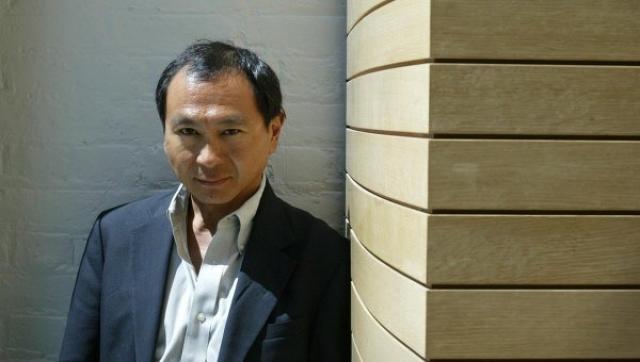
Francis Fukuyama
 USA
USA- Early Life and Education
- Government Service and RAND Corporation
- Rise to International Prominence
- Academic Career
- Intellectual Evolution
- Literary Contributions
- - The End of History and the Last Man (1992)
- - The Great Disruption (2003)
- Recognition and Influence
- Conclusion
Yoshihiro Francis Fukuyama: Intellectual Luminary and Political Scientist
Yoshihiro Francis Fukuyama, a renowned American philosopher, political scientist, political economist, and author, emerged as an intellectual giant with his seminal work, "The End of History and the Last Man."
Early Life and Education
Born in Chicago on October 27, 1952, Fukuyama's Japanese ancestry provided a unique lens through which he viewed the world. His academic journey began in New York City, where he excelled academically. He later graduated from Cornell University with a Bachelor of Arts in Classics, studying under Allan Bloom, a leading figure in political philosophy.
Fukuyama's intellectual curiosity led him to Yale University for graduate studies in comparative literature. However, his time in Paris, where he studied under Roland Barthes and Jacques Derrida, left him disillusioned. Upon returning to the United States, he shifted his focus to political science at Harvard University, studying under renowned scholars S. Huntington and Harvey Mansfield.
Government Service and RAND Corporation
Before completing his doctorate in political science in 1981, Fukuyama had already joined the RAND Corporation, a prominent think tank. His expertise in Middle Eastern affairs and Soviet military influence brought him to the attention of the U.S. State Department. He served as a Middle East policy specialist and later as deputy director for European political-military affairs, playing a role in peace negotiations in Lebanon and studying Soviet affairs.
Rise to International Prominence
In 1989, Fukuyama's essay, "The End of History?," published in the National Interest, catapulted him into the limelight. This essay later transformed into his groundbreaking book, "The End of History and the Last Man" (1992), which argued that the spread of liberal democracy marked the culmination of sociocultural evolution.
The book's thesis resonated deeply, provoking both praise and criticism. Its impact was undeniable, earning accolades in multiple languages and establishing Fukuyama as a leading intellectual voice.
Academic Career
Fukuyama held the post of professor of public policy at George Mason University's School of Public Policy from 1996 to 2000. He subsequently served as a member of the President's Council on Bioethics from 2001 to 2004. From 2004 to 2010, Fukuyama was a professor of international political economy and director of the International Development Program at the Paul H. Nitze School of Advanced International Studies at Johns Hopkins University.
He currently holds the position of Senior Fellow at the Freeman Spogli Institute for International Studies and is a resident at the Center on Democracy, Development, and the Rule of Law at Stanford University's Hoover Institution.
Intellectual Evolution
While "The End of History" proclaimed the triumph of liberal democracy, Fukuyama's views have evolved over time. He has distanced himself from the neoconservative movement, acknowledging that authoritarian states pose a formidable challenge to liberal democracy. His focus on the role of strong states in modern society reflects his ongoing intellectual journey.
Literary Contributions
Fukuyama's prolific literary output has left an indelible mark on contemporary thought. Some of his notable works include:
- The End of History and the Last Man (1992)
- Trust: The Social Virtues and the Creation of Prosperity (1995)- The End of Order (1997)
- The Great Disruption: Human Nature and the Reconstitution of Social Order (1999)
- Our Posthuman Future: Consequences of the Biotechnology Revolution (2002)
- State-Building: Governance and World Order in the 21st Century (2004)
- America at the Crossroads: Democracy, Power, and the Neoconservative Legacy (2006)
- The Origins of Political Order: From Prehuman Times to the French Revolution (2012)
- The Great Disruption (2003)
- Human Nature and the Reconstitution of Social Order (1999)- Trust: The Social Virtues and the Creation of Prosperity (1995)
- The End of History and the Last Man (1992)
- State-Building: Governance and World Order in the 21st Century. (2006)
- America at the Crossroads: Democracy, Power, and the Neoconservative Legacy (2006)
Recognition and Influence
Fukuyama's profound insights have earned him international recognition. He has received numerous awards and accolades, including the National Humanities Medal from the National Endowment for the Humanities. His ideas continue to shape public discourse and influence policy debates worldwide.
Conclusion
Yoshihiro Francis Fukuyama stands as a towering figure in contemporary intellectual thought. His pioneering work on the end of history and his subsequent inquiries into political order, global affairs, and the human condition have established him as one of the most influential thinkers of our time. His thought-provoking ideas and incisive analysis continue to inspire and challenge scholars, policymakers, and citizens alike.