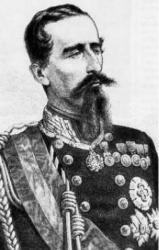
Francois Nicolas Benoit Haxo
 France
- Baron Nicolas Charles Marie Henri François d'Avout, Duc d'Auerstaedt
- Military Career
- Turkey and Spain
- Napoleon's Russian Campaign
- Later Campaigns
- Post-Napoleon
- Restoration and Late Career
- Death and Legacy
Baron Nicolas Charles Marie Henri François d'Avout, Duc d'Auerstaedt
Early Life and EducationNicolas Charles Marie Henri François d'Avout was born on June 24, 1774, in Lunéville, France. He was the nephew of General Nicolas d'Avout. D'Avout received his military education at the École de Châlons, where he excelled in his studies. In 1793, he enlisted in the engineering corps and later attended the École Polytechnique in Paris in 1796.
Military Career
Early CampaignsDuring the French Revolutionary Wars, D'Avout distinguished himself in the War of the First Coalition. His projects and works in strengthening Italian fortresses impressed Napoleon Bonaparte. D'Avout also participated in the Italian Campaigns of 1799-1800, where he gained further recognition.
Turkey and Spain
In 1807, D'Avout was sent to Constantinople to fortify the city in anticipation of a Russian siege. After completing this mission, he fought in Spain in 1809, where he earned the rank of colonel for his actions at the Siege of Zaragoza.
Napoleon's Russian Campaign
In preparation for Napoleon's invasion of Russia, D'Avout was tasked with repairing fortresses in Pomerania, Silesia, and Poland. During the campaign, he served in the army's staff, earning the rank of divisional general for his contributions at the First Battle of Polotsk. He also participated in the battles of Smolensk and Borodino.
Later Campaigns
In 1813, D'Avout fortified Hamburg and Dresden and fought in the Battle of Dresden. However, he was wounded and captured at the Battle of Kulm.
Post-Napoleon
After Napoleon's abdication, D'Avout served as chief engineer of the royal guard. During the Hundred Days, he rejoined Napoleon and fought at the Battle of Waterloo.
Restoration and Late Career
D'Avout became inspector general of engineering after the Restoration and played a significant role in modernizing French fortifications. He also drafted a plan for the fortification of Paris, which was later implemented. In 1832, he successfully led the siege of the Antwerp Citadel, earning him the title of peer of France and the Grand Cross of the Legion of Honor.
Death and Legacy
D'Avout died in Paris on June 25, 1838. His name was inscribed on the Arc de Triomphe in Paris. He was regarded as a brilliant military engineer and a prominent figure in French fortification. His contributions to the field continue to be studied and admired today.