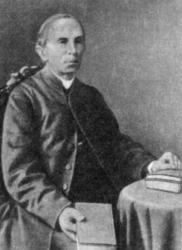
Francois Villon
 France
Biography of François Villon
François Villon (1431 - after 1463) was a French poet known for his polished verse, allusions, and dark humor, making him a unique figure in medieval literature.
Early Life
Villon was born near Paris in April 1431. His mother was believed to be from the province of Berry, but she could not keep him, so he was adopted by the chaplain Guillaume de Villon, the rector of the church of St. Benedict, which became Villon's home. He studied at the university and received his bachelor's degree in 1449 at the age of eighteen, then became a licentiate, and in the summer of 1452, a master. During his student years, he participated in a prank by stealing a boundary stone, known by an indecent nickname, from Madame de la Bruyère's property. This event was the subject of one of Villon's early works (now lost).
Exile and Imprisonment
In June 1455, Villon fatally wounded a young priest in a street brawl and was forced to flee Paris. He took refuge in Shevrez and Bur-la-Ren and engaged in amorous affairs with a dissolute abbess at the monastery of Por-Royal. In January 1456, he was granted a pardon and returned to Paris. Later that year, closer to Christmas, Villon decided to leave Paris and wrote a small playful poem of 320 lines called "Les Lais" or "Petit Testament," in which he bequeathed his rather dubious "property" to various townspeople. Around the same time, he became involved with a gang that robbed the College of Navarre. The names of the criminals soon became known to the authorities, and for about four years (1456-1460), Villon hid in the provinces of Berry, Orléans, and Dauphiné. In the summer of 1461, the poet found himself in the episcopal prison of Mantes-la-Jolie and was only released thanks to a royal amnesty. Friends and relatives of Villon obtained a conditional pardon for him, and he was able to return to Paris. After a brief imprisonment (November 3-7), he was released after giving a written commitment to repay his share of the stolen loot (120 écus). By this time, Villon had exhausted everyone's patience, and when he participated in a street fight at the beginning of 1463, he was sent to the Châtelet prison and quickly sentenced to death. He submitted a petition for clemency, and on January 5, the Paris Parliament commuted his death sentence to ten years of exile from the city.
Major Works
In late 1461 or early 1462, upon his return to Paris, Villon created his masterpiece, "Testament" or "Grand Testament." It follows the structure of "Les Lais," but the humorous bequests are preceded by an extensive introduction (stanzas 1-832). Additionally, the poet included various "ballades" and several other poems written at different times and for different occasions. The most famous of these is the "Ballade pour prier Nostre Dame" (Ballad for praying to Our Lady), which Villon attributed to his mother. Equally renowned is the ballad dedicated to the lively Parisian women ("Ballade des femmes de Paris") and the ballad that satirizes rural idyll (traditionally attributed to Bishop Philippe de Vitry) called "Les contrediz de Franc Gontier." The poem concludes with Villon's own epitaph and the "Ballade de mercy" (Ballad of mercy). Among the inserted ballads, the most notable is the "L'pitaphe Villon" (commonly known as "Ballade des pendus" or "Ballad of the Hanged"): it was written when Villon was awaiting execution. Several ballads written in the jargon of the Cockaygne thieves' fraternity have survived under Villon's name. They are nearly indecipherable.
Villon's poems were first printed in 1489 by the Parisian publisher Pierre Levet.