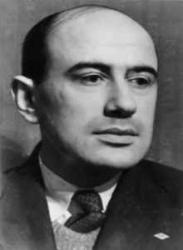
Frank Anderson
 Canada
- Frank Anderson: A Canadian Chess Legend
- Early Life and Introduction to Chess
- Rise to National and International Prominence
- Notable Matches and Contributions
- Later Career and Legacy
Frank Anderson: A Canadian Chess Legend
Frank Anderson, a Canadian chess player, overcame a debilitating illness that confined him to bed early in life to become Canada's top chess player and one of the world's best.
Early Life and Introduction to Chess
Anderson's childhood was marked by rheumatoid arthritis, a condition that severely limited his mobility. Bedridden for much of his early years, he turned to intellectual pursuits, particularly chess. He initially played chess by correspondence, developing his skills with the guidance of Bernard Freedman, Keith Kerns, and John G. Prentice, a Canadian representative of FIDE.
Rise to National and International Prominence
Despite his physical challenges, Anderson achieved impressive chess results. He earned a degree in physics and mathematics from the University of Toronto and excelled in chess competitions. His breakthrough came in the 1946 Canadian Championship, where he performed exceptionally well in the preliminary matches. He won the Toronto Championship six times and shared first place in the 1948 U.S. Junior Championship. In 1954, he became the first Canadian to receive the title of International Master of Chess.
Notable Matches and Contributions
Anderson engaged in a transatlantic match with Igor Bondarevsky in 1954, ultimately losing. However, he had a rematch with Bondarevsky in Toronto in July of the same year. From 1955 to 1964, he wrote a chess column for "The Hamilton Spectator." He also co-authored a book with Keith Kerns on the Fourth Biennial World Junior Chess Championship held in Toronto in 1957.
Later Career and Legacy
Anderson's thoughtful, meticulous, and positional style of play earned him a reputation as one of chess's finest endgamers. He also demonstrated an ability to execute surprising combinations early in games. He had an interest in computers and experimented with chess software.
After the 1964 Olympiad, Anderson moved to California with his wife, Sylvia. He settled in San Diego and worked as a tax consultant. He passed away on September 18, 1980, at the age of 52.
Frank Anderson remains a legend in Canadian chess, inspiring generations of players. His achievements attest to his determination, resilience, and love for the game.