Frank Calder
 Canada
- Early Life and Work in Montreal
- Founding the NHL
- A Legacy Beyond League-Building
- Final Years and Recognition
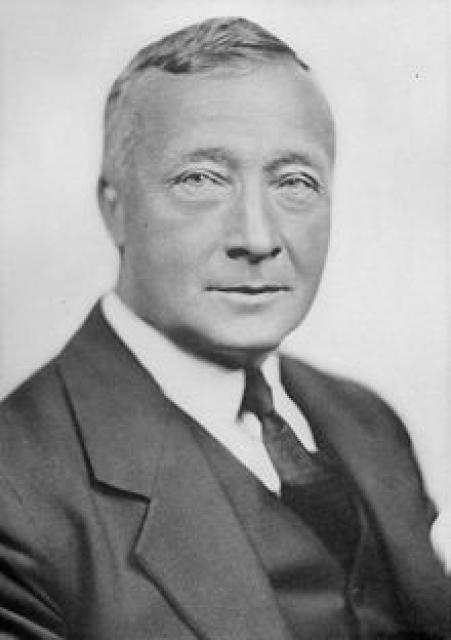
Frank Sellick Calder was the steady administrator who guided professional hockey through its transformation into a major North American sport. A journalist and sports organizer before he became a league executive, he served as the National Hockey League’s first president from its founding in 1917 until his death in 1943. His name endures on the Calder Memorial Trophy, awarded to the NHL’s top rookie.
Early Life and Work in Montreal
Calder was born in Bristol, England, on 17 November 1877. He later emigrated to Canada and settled in Montreal, where he worked as a teacher before turning to journalism and sports administration. His interests stretched well beyond ice hockey: he helped organize school rugby and became active in association football, serving as secretary-treasurer of the Montreal Football Association from 1903.
Those varied roles made Calder a familiar figure in Montreal’s sporting circles. He developed a reputation for organization and practical judgment, qualities that soon brought him into the administration of professional hockey. In 1914 he became secretary-treasurer of the National Hockey Association, the leading professional league of the era.
Founding the NHL
The National Hockey Association faced mounting strain during the First World War. In 1917, its owners decided to suspend the organization amid wartime disruptions and disputes over the league’s future. At meetings in Montreal’s Windsor Hotel, the owners of the Canadiens, Wanderers, Ottawa and Quebec clubs agreed to establish a new competition: the National Hockey League.
When the NHL was formally created on 26 November 1917, Calder was elected both president and secretary-treasurer. The new league began play the following month with a compact schedule and only a handful of teams. Its early years were turbulent. Quebec could not field a side immediately, the Montreal Wanderers folded after their arena burned, and the NHL had to prove its stability while professional hockey faced competition from rival organizations.
Calder’s authority was unusually broad in the league’s early structure. He oversaw its administration, dealt with franchise matters and helped keep the new competition operating through setbacks. Over time, the league expanded beyond Canada into the United States, a major step in the NHL’s growth. He remained its central executive as it developed from a small regional circuit into the sport’s dominant professional league.
A Legacy Beyond League-Building
Calder also took an early stand against racial exclusion in hockey. In the late 1920s, after learning of the Boston Black Panthers, an all-Black team, he stated that the NHL had no rule barring Black players. The position was notable in a period when racial segregation remained widespread in North American professional sports, even though the league’s record on inclusion would remain limited for decades.
He helped create a lasting honor for emerging players as well. Beginning in the 1932–33 season, Calder selected the league’s most promising rookie. In 1936 he persuaded the NHL’s board to fund a trophy for the distinction. After his death, the award was named the Calder Memorial Trophy, and it became one of hockey’s best-known individual honors.
Final Years and Recognition
Calder remained NHL president for more than 25 years, from the league’s founding through its early expansion and consolidation. He died in Montreal on 4 February 1943, while still in office. He was later inducted into the Hockey Hall of Fame as a builder, and Canada’s Sports Hall of Fame also recognized his contribution to the game.
His influence is remembered through both institutions and tradition: he helped establish the league that became the center of professional hockey, and the rookie award bearing his name continues to celebrate the next generation of players. The NHL’s first president left a legacy built not on goals or championships, but on the decisions and structure that gave the sport a durable future.