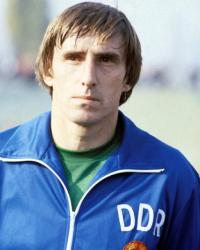
Patrik Viera
 Senegal
Biography of Patrick Vieira
Patrick Vieira, a French midfielder, was born on June 23, 1976, in Dakar, Senegal. Despite being of Portuguese descent, Vieira's ancestors hailed from Cape Verde, a former Portuguese colony also known as the Islands of Cape Verde. He has never known his father and often states that he has no desire to know him: "I have never met him, and I have no interest in finding out who he is or what he is doing. Furthermore, I have no desire to find out."
His mother gave birth to Patrick when she was just 17 and already had another child, his older brother Izzy Nikoro. In Africa in the 1970s, life was challenging due to high population density, unemployment, and poverty. To provide a better life for her children, Patrick's mother, a young woman studying to be an accountant, decided to move to France alone in search of housing and employment. The move proved successful, and soon she brought her parents to live in the Paris suburb of Trappes. Later, the family relocated to Dre, a small town located about 60 km from the French capital.
Despite growing up in one of the city's most crime-ridden neighborhoods, Patrick was not negatively influenced by the streets, thanks to his upbringing. His love for football was discovered during his time at a local high school. He was first invited to a local football school and then to the sports training center "Clairefontaine," where Zinedine Zidane also honed his skills. In his first season, Vieira played five matches for Cannes, and in the following season (1994/95), he became a regular member of the first team and later earned the captain's armband.
After impressing at Cannes, Vieira moved to AC Milan in November 1995. Though it was challenging for an 18-year-old to break into the first team of such a super club, Vieira never regretted his decision: "Of course, it was tough for me. I was just a graduate from the Clairefontaine training center, and there were players like Baresi, Maldini, and Costacurta. Moreover, the Bosman ruling had not come into effect yet, so only three foreign players were allowed to play, and I was the sixth in line and often left out. However, I knew that playing for Milan would guarantee offers from other clubs."
After spending six months at Milan, where he played only six matches (two in Serie A), Vieira was acquired by Arsenal in the summer of 1996 on the recommendation of French coach Arsene Wenger. Wenger later became the manager of the Gunners. Being enamored with Britain since childhood, Vieira was excited about the move. When asked about the level of English football, the midfielder responded, "The intensity in the English game is incomparable to what I experienced in Cannes and in the few matches I played for Milan. British players have a special desire to win, whether they are playing for a top team or an underdog - they are all focused on the fight."
Vieira made his debut for Arsenal on September 16, 1996, in a home game against Sheffield Wednesday. The Gunners won the match 4-1, and Patrick came on as a substitute in the second half. In his first season, Vieira enjoyed great success, winning over the fans, coaches, and becoming a regular starter. In the following season, Wenger acquired Emmanuel Petit from Monaco to partner with Vieira in midfield, and the duo soon gained worldwide recognition. At the end of the 1997/98 season, Vieira, who had won the FA Cup and the Premier League, was named Young Player of the Year. He also received an invitation to the French national team.
Vieira's recognition in the national team did not come as quickly as his friends Thierry Henry, David Trezeguet, or Nicolas Anelka, who frequently moved from club to club. However, during the 1998 World Cup, Vieira made a significant impact when he came on as a substitute in the final and assisted Emmanuel Petit's winning goal. Despite his limited playing time, Vieira remained unfazed: "Personally, I believe that everything falls into place with time. The national team was just another step in my journey." Just two years later, at Euro 2000 in Belgium and the Netherlands, Vieira emerged as a key player for France. His strength, work rate, and ability to make long passes made him the best defensive midfielder not only for the French team but also for the entire tournament.
Despite his success, Vieira remained humble and kept a low profile off the field. He is one of the few World Cup and European Championship winners whose personal life remains relatively unknown. Vieira firmly believes that modesty is the best way to achieve success: "Silence is the best way to be heard." However, his imposing physique and tenacity on the field sometimes lead to rule violations. Vieira vehemently denies any malicious intent: "In the heat of the battle, when I am driven by the desire to win, I sometimes lose control." There have been instances of unsportsmanlike behavior, such as when he was sent off for spitting at Neil Ruddock during a match against West Ham in the 1999/2000 season and got into an altercation with a police officer on his way to the dressing room. Vieira received a seven-match suspension and a record fine of approximately $70,000, the highest in the history of the English League.
In the 2000/01 season, Vieira began impressively with two red cards in the first two matches of the English Premier League. After the second sending off, he lost his composure, tore off and threw his shirt on the ground, and repeatedly murmured to himself, "I won't play anymore, I won't play anymore..." However, he bounced back in the third game. Arsenal defeated Charlton 5-3, with Vieira scoring two goals. Despite facing hurdles, Vieira remains true to his philosophy: never give up, and time will heal all wounds. In the 2001 season, Arsenal finally clinched the title and the FA Cup, thanks to Vieira's commanding presence in midfield and Wenger's tactical adjustments.
Today, Vieira is widely regarded as the best defensive midfielder in the world, and he has reliable backup options in the French national team. The absence of a "second Zidane" in France and the lack of a world-class playmaker due to Zinedine Zidane's injury were significant factors in the national team's failure at the 2002 World Cup.