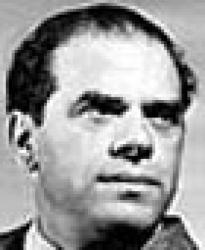
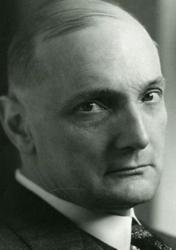
Frank Kapra
 USA
- From Sicily to Hollywood
- The Columbia years and the “little man”
- Wartime service
- A beloved film and a changing industry
- Legacy
Frank Capra turned the lives of ordinary people into big-screen fables about courage, community, and the possibility of doing the right thing. From the runaway comedy *It Happened One Night* to the political idealism of *Mr. Smith Goes to Washington* and the seasonal favorite *It’s a Wonderful Life*, he became one of Hollywood’s defining directors of the 1930s and 1940s.
From Sicily to Hollywood
Born on May 18, 1897, in Bisacquino, Sicily, Capra immigrated to the United States with his family in 1903 and grew up in Los Angeles. He worked a range of jobs while attending school, eventually earning a degree in chemical engineering from the Throop Institute, later known as Caltech, in 1918.
Film offered an unlikely new path. Capra entered the industry through small production jobs and gag writing, working for comedy producers Hal Roach and Mack Sennett. He went on to direct silent comedies starring Harry Langdon, learning how to build a story around a performer’s timing and a carefully constructed visual joke. His technical background and practical experience gave him an unusually hands-on approach to filmmaking.
The Columbia years and the “little man”
Capra rose to prominence at Columbia Pictures, where he became a major creative force in the studio’s transformation from a modest operation into a leading Hollywood company. His most important writing partnership was with Robert Riskin, whose sharp dialogue and humane comic plots helped give Capra’s films their distinctive rhythm.
Their 1934 comedy *It Happened One Night*, starring Clark Gable and Claudette Colbert, became a sensation and made Academy Awards history. It was the first film to win the five leading Oscars for Best Picture, Director, Actor, Actress, and Screenplay. Capra followed it with *Mr. Deeds Goes to Town* (1936), *You Can’t Take It with You* (1938), and *Mr. Smith Goes to Washington* (1939), films that championed unassuming characters confronting money, power, and entrenched institutions.
Capra won the Academy Award for Best Director three times: for *It Happened One Night*, *Mr. Deeds Goes to Town*, and *You Can’t Take It with You*. His stories often placed a decent, stubborn “little guy” opposite a powerful adversary, while finding drama in everyday generosity, civic responsibility, and the value of community.
Wartime service
After the United States entered the Second World War, Capra left Hollywood to serve in the Army Signal Corps. He directed and supervised the seven-part documentary series *Why We Fight*, designed to explain the conflict to American service members and the public. The films combined newsreel images, captured footage, narration, and music into clear arguments about the war’s causes and stakes.
The series brought his editing and storytelling skills into government film work. The first installment, *Prelude to War*, won the Academy Award for Best Documentary Feature. Capra received the Distinguished Service Medal for his wartime service.
A beloved film and a changing industry
After the war, Capra helped form the independent company Liberty Films with William Wyler, George Stevens, and Samuel J. Briskin. Its first release was *It’s a Wonderful Life* (1946), starring James Stewart as George Bailey, a small-town banker who comes to understand the importance of his life to others. The movie was not a major success on its initial release, but later television screenings helped turn it into one of the most widely cherished American films.
Capra continued directing through the 1950s and made his final feature, *A Pocketful of Miracles*, in 1961. The postwar film industry was changing, and his output slowed as the optimistic populism of his best-known work gave way to new styles and subjects. Yet the influence of his strongest films kept growing.
Legacy
Capra’s work remains admired for its warmth, comic precision, and faith in the moral force of ordinary people. His films offered a recognizable vision of American life—sometimes idealized, but shaped by characters who insist that decency and collective action matter. He died in La Quinta, California, on September 3, 1991, leaving behind a body of films that continues to shape how audiences imagine Hollywood’s golden age.