Frank-Walter Steinmeier
 Germany
Biography of Frank-Walter Steinmeier
Frank-Walter Steinmeier was born on January 5, 1956, in the village of Brakelsiek, near the small town of Detmold in North Rhine-Westphalia, Germany. His father was a carpenter and his mother worked in a factory. Steinmeier attended school in Detmold from the age of 6, and in 1966, he transferred to a high school in the neighboring city of Blomberg. He was passionate about football and played as a midfielder for the TuS 08 Brakelsiek club.
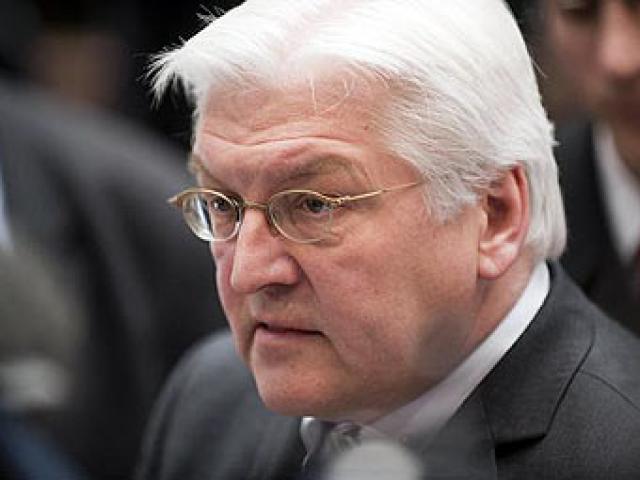
After graduating from high school in 1974, Steinmeier served in the army for two years. In 1975, he joined the Social Democratic Party of Germany (SPD). Initially, Steinmeier planned to pursue a career as a sports presenter or architect, but ultimately decided to become a lawyer due to the potential for higher income. From 1976 to 1982, he studied law and political science at the Justus Liebig University in Giessen. After passing the first state legal exams, Steinmeier gained legal practice experience in Frankfurt and Giessen, and worked as an assistant at the department of public law and political science at Giessen University. He passed the second state legal exams in 1986, which allowed him to practice law.
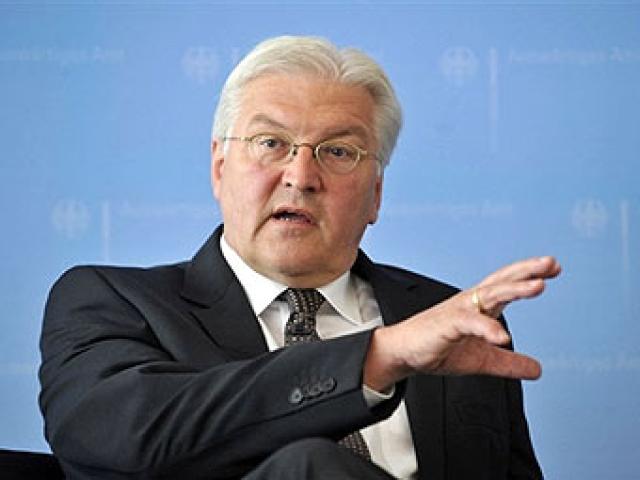
In 1991, Steinmeier defended his doctoral dissertation on administrative measures to combat homelessness and was appointed as a consultant on information law and media policy at the Lower Saxony Governor's Office, headed by Gerhard Schröder at the time. Steinmeier proved himself to be a hardworking and loyal employee to Schröder. From 1993 to 1994, he headed Schröder's personal office, and from 1994 to 1996, he served as the director of the department for policy directives, coordination, and planning in Lower Saxony. From 1996 to 1998, Steinmeier was the state secretary and chief of the state chancellery in Lower Saxony. During his time in Lower Saxony, he became a trusted associate of Schröder and was part of the so-called "Hanover Mafia," which consisted of SPD members and colleagues of the future chancellor. Due to his effective work and skilled negotiations with the SPD's coalition partner, the Green Party, Steinmeier earned the nickname "The Gray Efficiency."
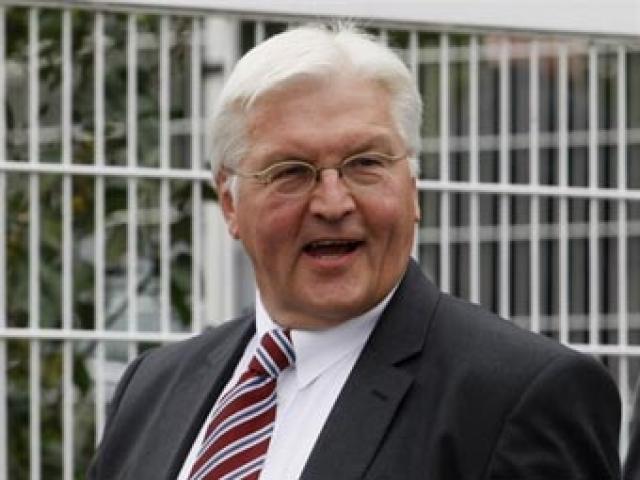
After Gerhard Schröder's victory in the German federal election in November 1998, Steinmeier served as state secretary of the federal government and coordinator of the activities of intelligence agencies until July 1999. In July 1999, he was appointed as the head of the Federal Chancellery and became a member of the German Security Council. Despite the importance of his position, Steinmeier avoided the press and was relatively unknown to the public. He was referred to as Schröder's "right-hand man" and "the gray cardinal." He was the author of many key laws, including unpopular pension and tax reforms that reduced state funding for the social system. Alongside the federal foreign minister, Joschka Fischer, Steinmeier influenced Germany's foreign policy and advocated for closer ties with Russia, including participating in the development of the Baltic Sea pipeline project. His relationship with the United States was cool, and after the September 11, 2001 attacks, representatives of the FBI complained that the German intelligence agencies, led by Steinmeier, were reluctant to share information. In 2002, Steinmeier negotiated with the United States on plans for the invasion of Iraq and in early 2003, he informed the US ambassador to Germany that Germany would not participate in the military operation. Steinmeier played an important role in the Middle East peace process, acting as a mediator between Israel and Hezbollah.
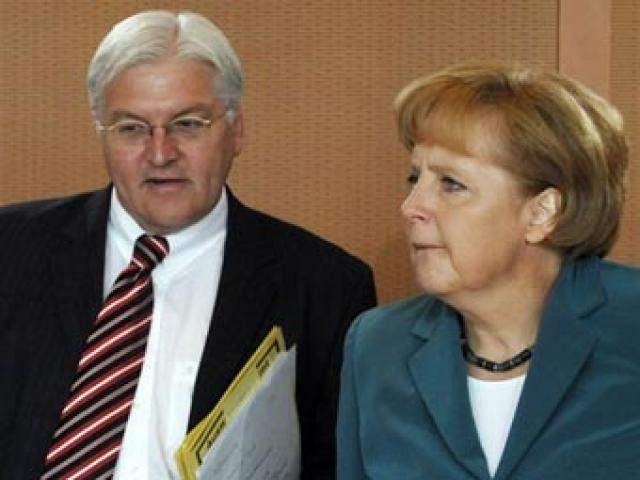
In November 2005, after Angela Merkel was elected as the Chancellor of Germany, Steinmeier unexpectedly became the Federal Minister of Foreign Affairs, becoming the first SPD member to hold this position since Willy Brandt. Rumors suggested that his appointment was influenced by Germany's financial circles, who did not want a sudden change in Germany's foreign policy, particularly towards Russia. After his appointment, Steinmeier hurried to reassure the United States, which was concerned about his pro-Russian stance and past issues in cooperation between intelligence agencies. However, he continued to maintain good relations with Russian presidents Vladimir Putin and Dmitry Medvedev. He expressed opposition to the placement of US military bases in Eastern Europe without consultation with Moscow. In May 2008, Steinmeier refused to meet with the 14th Dalai Lama and, in contrast to Merkel, was against isolating China, Iran, and other countries based on their "lack of democracy."
In the first half of 2007, Steinmeier served as the President of the Council of the European Union. He supported Turkey's accession to the EU and the creation of an independent state of Kosovo. In 2008, Steinmeier proposed a three-stage plan to resolve the Georgian-Abkhaz conflict, which involved the return of refugees, the reconstruction of Abkhazia funded by Georgia, and determining the political status of Abkhazia in the future. However, both sides rejected this document.
In November 2007, after the resignation of Franz Müntefering, Steinmeier became the Vice-Chancellor of Germany, the second-highest position in the country. Although Steinmeier had never held positions in the Social Democratic Party before being appointed as one of its vice-chairmen in October 2007, he was repeatedly mentioned as a possible candidate for the position of Federal Chancellor of Germany from the SPD. However, Steinmeier denied these assumptions and stated that he would support the candidacy of the SPD chairman, Kurt Beck.
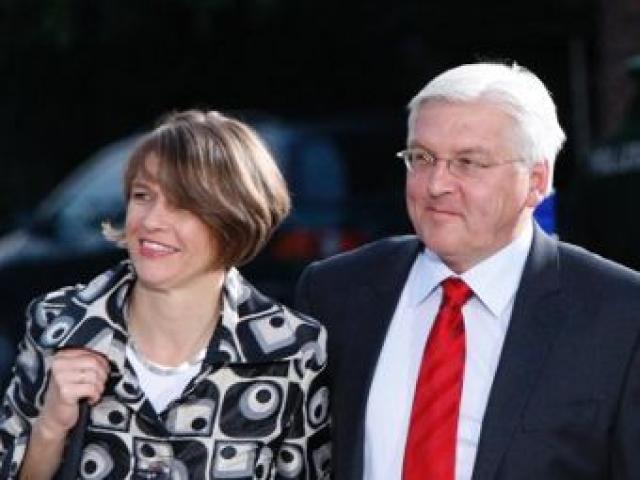
Steinmeier is married to Elke Buedenbender, a judge specializing in administrative law. The couple has a daughter born in 1996. They live in the prestigious Berlin district of Zehlendorf. Several times a year, Steinmeier visits his parents and his brother Dirk, who live in Detmold. He has a passion for football.