Fransua Duvalier
 Haiti
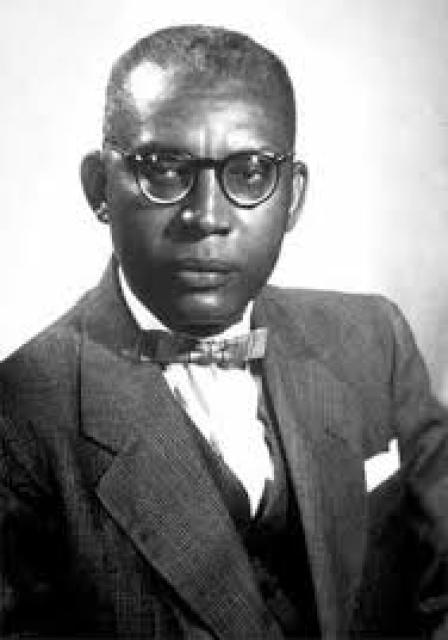
François Duvalier (1907–1971), better known as Papa Doc, was a Haitian physician and politician who ruled Haiti from 1957 until his death. His early work in public health and nationalist writing helped build his political profile, but his presidency became a dictatorship sustained by surveillance, paramilitary violence, and a cult of personal authority. He declared himself president for life in 1964 and was succeeded by his son, Jean-Claude.
A Doctor and Political Organizer
Duvalier was born in Port-au-Prince on April 14, 1907. He studied at the Lycée Pétion and earned a medical degree in 1934, the year the United States ended its occupation of Haiti. As a doctor, he took part in public health campaigns against yaws, a contagious tropical disease, and later studied public health at the University of Michigan.
Alongside medicine, Duvalier wrote about Haitian history and culture. He was associated with noirisme, a current of black nationalist thought that emphasized Haiti’s African heritage and challenged the political dominance of the mulatto elite. In the 1940s, he entered government under President Dumarsais Estimé, first directing the national yaws program and then serving in labor and public health posts. Estimé’s overthrow in 1950 pushed Duvalier out of office during a period of political instability.
Rise to Power
After years of upheaval and interim governments, Duvalier won the 1957 presidential election. He campaigned as a country doctor and a defender of ordinary Haitians, drawing on his medical work and nationalist politics. His government initially drew support from people who hoped for greater political inclusion, but his rule quickly narrowed the space for opposition.
An attempted coup in 1958 deepened Duvalier’s distrust of the regular army. He reshaped the military leadership and built a parallel force, the Volunteers for National Security, widely known as the Tonton Macoutes. The name referred to a feared figure from Haitian folklore. Under Duvalier, the force became a tool of political control, intimidating opponents and expanding the regime’s reach into rural communities.
Rule by Fear and Personal Authority
Duvalier’s government suppressed independent newspapers and broadcasters, persecuted political opponents, and drove many Haitians into exile. The Tonton Macoutes and other security forces carried out surveillance and violence with little accountability. Meanwhile, Duvalier used state ceremonies, black nationalist imagery, and public references to Vodou to strengthen his image as the embodiment of Haitian authority. His cultural politics drew on Haiti’s African heritage, while his administration relied on coercion and patronage to retain power.
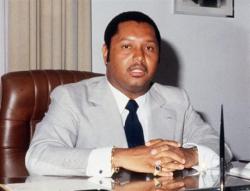
In 1964, Duvalier was declared president for life and given authority to name a successor. By then, formal political institutions had been reshaped to serve his rule. He died in Port-au-Prince on April 21, 1971, aged 64. His 19-year-old son Jean-Claude succeeded him, extending the Duvalier family’s rule until 1986.
Legacy
Duvalier’s legacy remains bound to the contradiction between the nationalist language of his movement and the violence of his government. He presented himself as a champion of Haiti’s black majority and African-rooted culture, but concentrated power around himself and used paramilitary repression to silence dissent. The institutions and practices established during his presidency shaped Haitian politics long after his death and left a lasting record of state abuse and exile.